
Ultimate FIFA World Cup 2026 Luxury Transportation Guide: Stadium Logistics, Airport Transfers, VIP Mobility & Chauffeur Services Across the United States
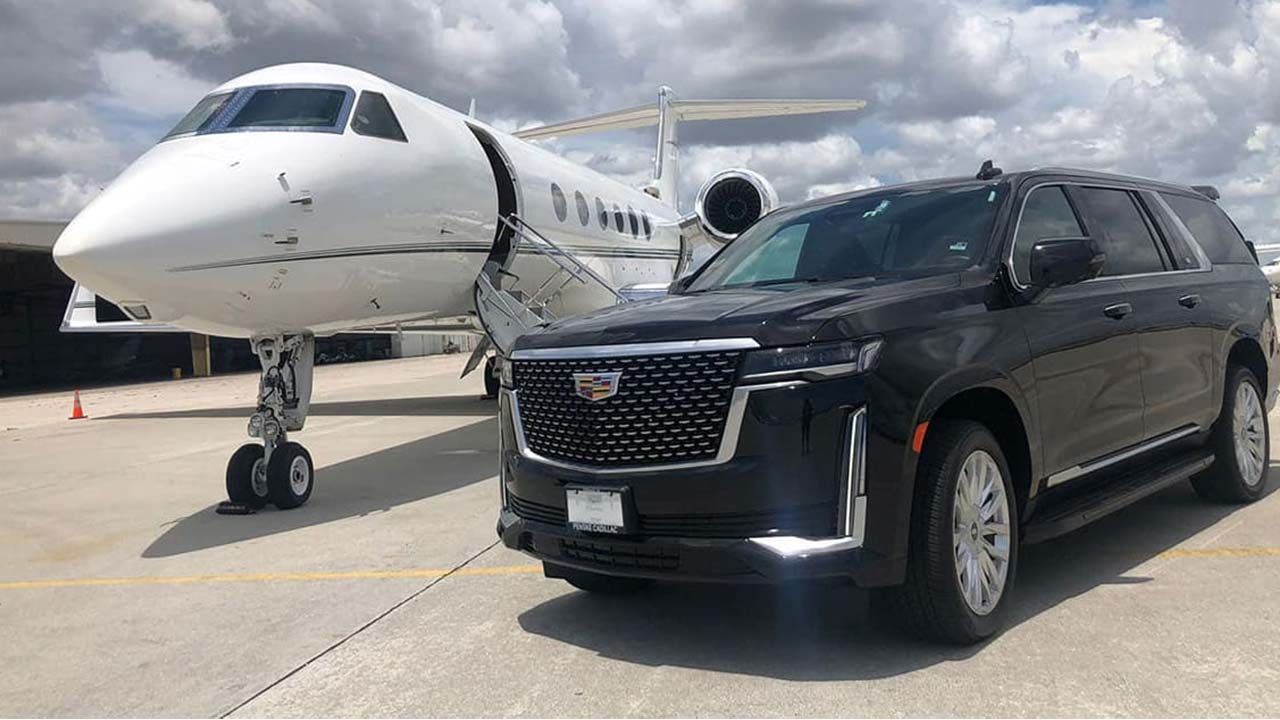
Planning Transportation for the FIFA World Cup 2026 Starts Long Before Match Day
The FIFA World Cup 2026 will redefine international sports travel. For the first time in tournament history, 48 national teams will compete across three countries, creating the largest football event ever organized. Millions of supporters, corporate sponsors, media organizations, athletes’ families, government delegations, and VIP guests will travel simultaneously across North America, placing unprecedented pressure on airports, highways, hotels, and urban transportation systems.
While securing match tickets and accommodations is often the first priority for travelers, transportation is frequently underestimated until the final stages of trip planning. During the tournament, however, reliable ground transportation may become one of the most critical factors affecting the overall experience. Delays caused by traffic restrictions, security checkpoints, temporary road closures, and limited vehicle availability can quickly disrupt carefully planned itineraries.
For premium travelers, business executives, private aviation clients, and corporate hospitality groups, transportation is more than a simple transfer between destinations. It becomes an essential component of operational planning, requiring precision, flexibility, and local expertise.
This guide was created to help travelers understand the logistical realities of moving efficiently between airports, hotels, stadiums, business districts, entertainment venues, and private terminals throughout the United States during the FIFA World Cup 2026.
Whether attending a single match in Miami or coordinating a multi-city itinerary across several host markets, understanding how transportation systems will operate during the tournament can significantly improve both convenience and reliability.
Why Transportation Will Be One of the Biggest Challenges During FIFA World Cup 2026
Unlike previous FIFA World Cups hosted within relatively compact geographic regions, the 2026 tournament will span thousands of miles across the United States, Canada, and Mexico. Even within the United States alone, host cities are separated by significant distances, requiring travelers to combine domestic flights, private aviation, long-distance ground transportation, and local transfers throughout their journey.
The challenge extends well beyond intercity travel.
Most American stadiums were intentionally built outside dense urban centers, offering expansive parking facilities and easy highway access under normal conditions. During the World Cup, however, these same road networks are expected to experience extraordinary demand as hundreds of thousands of visitors converge on match venues within narrow arrival windows.
Several operational factors contribute to this complexity:
- Temporary traffic management plans around stadiums.
- Enhanced security perimeters established for FIFA operations.
- Road closures before and after matches.
- Designated commercial vehicle access zones.
- Increased demand for airport transfers.
- Limited rideshare availability during peak departure periods.
- Dynamic pricing across taxis and transportation platforms.
- Simultaneous corporate events, hospitality programs, and fan festivals.
For international visitors unfamiliar with local road systems, even relatively short distances can require considerably longer travel times than expected.
A journey that normally takes twenty-five minutes may require more than ninety minutes on match day depending on kickoff time, weather conditions, security operations, and surrounding events.
Understanding these variables before arriving allows travelers to build realistic schedules and minimize unnecessary stress throughout the tournament.
Why Luxury Ground Transportation Matters During the Tournament
Luxury transportation is often associated exclusively with comfort. During a global event such as the FIFA World Cup, however, its greatest value lies in operational reliability.
Professional chauffeur services provide advantages that become increasingly important when transportation infrastructure operates under exceptional demand.
Rather than depending on vehicle availability after leaving the stadium, travelers have a dedicated transportation plan already integrated into their schedule. This significantly reduces uncertainty during one of the busiest travel periods ever experienced by host cities.
Dedicated chauffeurs continuously monitor flight schedules, traffic conditions, road closures, weather developments, and route adjustments, allowing itineraries to adapt in real time when circumstances change.
For corporate delegations, executive travelers, sponsors, and hospitality clients, this level of coordination helps protect meeting schedules, media commitments, networking events, and hospitality programs that often occur before and after matches.
For leisure travelers, it creates a smoother experience by eliminating common logistical concerns such as locating transportation after large events, navigating unfamiliar highways, or managing luggage between multiple hotels and airports.
Ultimately, premium transportation is less about luxury itself and more about reducing uncertainty in an environment where delays are expected rather than exceptional.
Who This Guide Is Designed For
Although every traveler attending the FIFA World Cup can benefit from understanding local transportation systems, this guide focuses particularly on visitors whose schedules require greater precision, flexibility, or logistical coordination.
It is especially valuable for:
International Visitors
Travelers arriving from overseas who may be unfamiliar with American highways, airport procedures, stadium locations, and regional transportation options.
Corporate Hospitality Programs
Companies hosting executives, clients, sponsors, or strategic partners throughout the tournament often manage complex itineraries involving hotels, restaurants, hospitality suites, stadium access, conferences, and business meetings.
Private Aviation Travelers
Passengers utilizing Fixed Base Operators (FBOs) require transportation that integrates seamlessly with private flight schedules while minimizing waiting times between aircraft arrival and final destination.
Family Offices and High-Net-Worth Individuals
Private groups frequently prioritize privacy, flexibility, security, and personalized service throughout extended multi-city journeys.
Sports Agencies and Athlete Support Teams
Agencies managing players’ families, consultants, commercial partners, and operational staff require transportation capable of adapting quickly to changing schedules.
International Media Organizations
Journalists, broadcasters, production teams, and technical crews often move continuously between airports, stadiums, hotels, interview locations, and broadcasting facilities under extremely tight deadlines.
Large Groups
Families, supporters’ clubs, incentive programs, and corporate delegations require coordinated transportation capable of moving multiple passengers efficiently while maintaining consistent service standards.
What Makes This Guide Different
Many transportation guides focus primarily on distances between airports and stadiums or provide generic travel recommendations that remain applicable throughout the year.
The FIFA World Cup presents a fundamentally different operational environment.
Transportation during the tournament is influenced by temporary security measures, event-specific traffic management plans, coordinated police operations, designated commercial vehicle routes, hospitality logistics, media activity, and unusually concentrated travel demand.
This guide has therefore been developed from a logistical perspective rather than a tourism perspective.
Instead of simply listing destinations, it explains how transportation functions during major international sporting events, identifies potential operational challenges, and provides practical planning recommendations that help travelers build more reliable itineraries.
Each stadium analysis includes geographic context, surrounding infrastructure, expected traffic conditions, recommended arrival strategies, nearby airport options, and transportation considerations specific to that venue.
The objective is to help travelers make informed decisions before arriving, reducing uncertainty while maximizing both efficiency and overall travel experience.
Why Early Transportation Planning Can Make a Significant Difference
Many visitors reserve flights and hotels several months before the tournament but postpone transportation planning until shortly before departure.
Historically, major sporting events demonstrate that this approach often creates unnecessary challenges.
As vehicle availability decreases and demand rises, travelers may encounter higher pricing, reduced fleet options, longer waiting times, and limited scheduling flexibility—particularly for larger groups or premium vehicles.
Planning transportation alongside flights and accommodations allows itineraries to be coordinated as a complete travel strategy rather than a collection of independent reservations.
This becomes especially important for travelers attending matches in multiple cities, utilizing private aviation, participating in corporate hospitality programs, or managing complex schedules involving business meetings and leisure activities.
The earlier transportation logistics are integrated into the overall itinerary, the greater the opportunity to optimize routes, reduce downtime, and improve operational efficiency throughout the tournament.
Luxury Transportation Services for FIFA World Cup 2026

Choosing the Right Transportation Strategy for the FIFA World Cup 2026
Transportation during the FIFA World Cup 2026 is not simply about moving from one location to another. Every transfer becomes part of a much larger logistical operation involving airports, hotels, stadium security zones, hospitality venues, business meetings, restaurants, entertainment districts, and, in many cases, travel between multiple host cities.
Unlike traditional vacations where travelers can make transportation decisions spontaneously, the World Cup rewards careful planning. Match schedules, airport congestion, police traffic control, and limited vehicle availability can quickly affect even well-organized itineraries.
Selecting the appropriate transportation service depends on several factors, including the number of passengers, arrival airport, accommodation location, match schedule, luggage requirements, privacy expectations, and the flexibility needed throughout the day.
The following sections explain when each transportation solution is most effective and how different types of travelers can build an efficient mobility strategy throughout the tournament.
Airport Transfers
Why Airport Transfers Require Advance Planning During the World Cup
For most international visitors, the tournament begins at the airport.
During the FIFA World Cup 2026, airports serving host cities are expected to operate well above their normal passenger volumes. International arrivals, domestic connecting flights, charter operations, media personnel, sponsors, football federations, and hospitality guests will all converge within compressed travel periods.
Although airports such as Miami International Airport, Dallas/Fort Worth International Airport, Hartsfield-Jackson Atlanta International Airport, Los Angeles International Airport, and John F. Kennedy International Airport are designed to accommodate millions of passengers annually, tournament demand introduces additional complexity.
Common challenges include:
- Longer immigration processing for international arrivals.
- Increased baggage claim waiting times.
- Heavy curbside congestion.
- Temporary pickup restrictions.
- High demand for taxis and rideshare services.
- Dynamic pricing during peak arrival periods.
- Delays caused by simultaneous flight arrivals.
These conditions make pre-arranged airport transportation considerably more reliable than attempting to secure transportation after landing.
Professional airport transfer services continuously monitor commercial flight schedules, allowing pickup times to adjust automatically in response to delays or early arrivals. This coordination reduces uncertainty while ensuring travelers transition efficiently from the airport to hotels, residences, meeting venues, or stadiums.
Airport transfers are particularly valuable for international travelers arriving with luggage, families, corporate delegations, and visitors unfamiliar with local transportation systems.
Private Aviation & FBO Transportation
A Different Level of Ground Logistics
Private aviation operates under entirely different logistical requirements than commercial airline travel.
Passengers arriving through Fixed Base Operators (FBOs) expect a seamless transition from aircraft to ground transportation with minimal waiting time, maximum privacy, and highly coordinated scheduling.
Several FIFA host cities are supported by major business aviation facilities, including:
- Miami Opa-locka Executive Airport
- Teterboro Airport
- Van Nuys Airport
- Dallas Love Field
- Addison Airport
- Fort Lauderdale Executive Airport
- Boca Raton Airport
- Westchester County Airport
- Chicago Executive Airport
Unlike commercial terminals, FBO operations require precise coordination between flight crews, dispatch teams, customs procedures, and ground transportation providers.
Flight plans may change with little notice, departure times are frequently adjusted, and aircraft often arrive earlier than originally scheduled.
Ground transportation supporting private aviation must therefore remain flexible while maintaining continuous communication with flight departments and fixed-base operators.
For executives, athletes, entertainers, investors, and family offices, this level of operational coordination is often as important as the vehicle itself.
Chauffeur Service
More Than a Driver
One of the biggest misconceptions among international visitors is assuming that a chauffeur service is simply a luxury version of a taxi.
In reality, professional chauffeurs perform a significantly broader operational role during major international events.
Beyond driving, experienced chauffeurs monitor traffic conditions, evaluate alternate routes, anticipate security restrictions, coordinate arrival schedules, assist with luggage, maintain communication with dispatch teams, and adapt transportation plans as conditions evolve throughout the day.
During the FIFA World Cup, these responsibilities become increasingly valuable due to temporary road closures, police-controlled intersections, designated commercial vehicle corridors, and large pedestrian zones surrounding stadiums.
Rather than reacting to transportation challenges after they occur, professional chauffeurs continuously anticipate them.
For travelers operating on fixed schedules, this proactive approach significantly improves reliability.
Hourly Charter Service
The Most Flexible Transportation Solution for Match Days
Many visitors assume transportation only matters before and after the match.
In reality, match-day schedules often include restaurants, sponsor events, business meetings, hospitality lounges, sightseeing, shopping, or multiple stadium-related activities.
A point-to-point reservation addresses only one portion of the day’s itinerary.
An hourly charter provides continuous vehicle availability throughout the reservation period, allowing travelers to move freely between destinations without arranging multiple bookings.
This flexibility becomes particularly valuable after the final whistle.
As tens of thousands of spectators attempt to leave the stadium simultaneously, rideshare availability decreases dramatically while waiting times increase.
Passengers with an hourly reservation return directly to their pre-arranged pickup location, where their chauffeur remains available according to the agreed schedule.
For many VIP travelers, this represents the most efficient transportation model during the tournament.
Corporate Transportation
Supporting Business Beyond Football
The FIFA World Cup is not only the world’s largest sporting event but also one of its largest business gatherings.
Global sponsors, multinational corporations, investors, media organizations, government officials, consulting firms, and technology companies organize hundreds of parallel events throughout the tournament.
Executives frequently attend breakfast meetings, hospitality programs, networking receptions, stadium suites, client dinners, conferences, and airport transfers within the same day.
Corporate transportation therefore requires considerably more than reliable vehicles.
Successful execution depends on schedule coordination, route optimization, communication between dispatchers and executive assistants, and the ability to adjust rapidly when meetings change unexpectedly.
For organizations managing multiple executives simultaneously, centralized transportation planning becomes an essential operational resource.
Road Show Transportation
Precision for Multi-Stop Executive Itineraries
Road shows involve carefully scheduled itineraries with multiple destinations throughout the day.
Unlike traditional transfers, these programs require strict adherence to timelines while maintaining flexibility to accommodate changes.
During the World Cup, road shows frequently combine:
- Executive meetings
- Corporate hospitality venues
- Media interviews
- Stadium visits
- Sponsor activations
- Hotel transfers
- Airport pickups
Every delay at one location has the potential to affect the remainder of the schedule.
Coordinated transportation minimizes these risks by continuously monitoring progress and adjusting routes throughout the day.
Groups & Events Transportation
Coordinating Large Groups Efficiently
Managing transportation for large groups involves considerably more complexity than increasing vehicle capacity.
Groups often arrive on different flights, stay at different hotels, require coordinated departure times, and travel with varying luggage requirements.
Maintaining synchronized movement between airports, hotels, stadiums, restaurants, and entertainment venues requires detailed operational planning.
Executive vans, luxury minibuses, and motor coaches provide scalable solutions while allowing groups to remain together throughout the tournament.
This approach simplifies logistics, reduces scheduling conflicts, and creates a more consistent travel experience for corporate hospitality programs, supporter groups, conferences, and family reunions.
Point-to-Point Transfers
Efficient Transportation for Individual Trips
Not every itinerary requires an entire day’s vehicle reservation.
Point-to-point transportation remains an efficient solution for travelers with clearly defined schedules, such as:
- Airport to hotel
- Hotel to stadium
- Restaurant to hotel
- Hotel to conference center
- Business meeting to airport
Pre-arranged transfers provide predictable scheduling while eliminating uncertainty associated with local transportation availability during high-demand periods.
Long-Distance Transportation Between Host Cities
An Alternative to Short-Haul Flights
Several FIFA host cities are connected by highway corridors that make private ground transportation a practical alternative to regional flights.
Travelers often underestimate the total time required for domestic air travel.
Although flight durations may appear short, the complete journey includes airport arrival, security screening, boarding, baggage claim, ground transportation, and potential delays.
For shorter regional routes, direct chauffeur service may offer greater efficiency while providing uninterrupted privacy, productivity, and comfort.
Popular examples include:
- New York to Philadelphia
- Boston to New York
- Dallas to Houston
- Miami to Orlando
- San Francisco to Silicon Valley
- Los Angeles to Orange County
For executives working during transit, uninterrupted travel time often becomes more valuable than slightly shorter flight durations.
Luxury Travel & City Experiences
Making the Most of Time Between Matches
Few visitors attend matches every day throughout the tournament.
Many itineraries include free days that provide opportunities to explore host cities and surrounding destinations.
Professional transportation simplifies access to cultural attractions, waterfront districts, luxury shopping, museums, fine dining, golf resorts, beaches, and nearby destinations without requiring visitors to navigate unfamiliar road systems or parking restrictions.
Whether exploring South Beach in Miami, Beverly Hills in Los Angeles, Back Bay in Boston, Buckhead in Atlanta, or the neighborhoods surrounding Manhattan, professionally coordinated transportation allows travelers to maximize their time while maintaining comfort and flexibility.
Building the Right Transportation Plan
No two World Cup itineraries are identical.
Some travelers will attend a single match before returning home, while others will spend several weeks following multiple national teams across different host cities.
An effective transportation strategy should consider:
- Arrival and departure airports.
- Number of cities included in the itinerary.
- Hotel locations.
- Match schedules.
- Group size.
- Luggage requirements.
- Business commitments.
- Desired flexibility.
- Privacy expectations.
- Travel between airports, stadiums, hotels, and entertainment districts.
Planning these elements together creates a more efficient travel experience while reducing uncertainty during one of the busiest international events ever hosted in North America.
By aligning transportation with the overall itinerary from the beginning, travelers gain greater control over their schedules, improve operational reliability, and can focus on enjoying the tournament rather than managing logistics.
Why Professional Transportation Becomes a Competitive Advantage During the FIFA World Cup
The FIFA World Cup 2026 will be remembered not only for the football on the pitch but also for the unprecedented scale of movement across North America. Millions of individual journeys will take place each day, creating logistical challenges that extend far beyond normal tourism.
For many visitors, transportation will determine whether they arrive relaxed and on time or spend valuable hours dealing with congestion, uncertainty, and unexpected delays.
Choosing the right transportation strategy early allows every other part of the itinerary—from airport arrivals to stadium departures and business engagements—to operate with greater efficiency and confidence.
The next section of this guide examines each of the 11 U.S. host stadiums in detail, providing practical insights into geography, surrounding infrastructure, expected traffic conditions, recommended arrival strategies, nearby airports, and transportation considerations unique to every venue. This stadium-by-stadium analysis helps travelers make informed decisions before they arrive, reducing uncertainty and improving the overall World Cup experience.
Complete Guide to Every FIFA World Cup 2026 Stadium in the United States
Understanding Stadium Logistics During the FIFA World Cup 2026
Although every FIFA World Cup host stadium offers a unique experience, they share one important characteristic during major international events: transportation becomes significantly more complex than on a typical match day.
Most visitors naturally focus on purchasing tickets, selecting hotels, and planning sightseeing activities. However, experienced travelers understand that reaching the stadium efficiently—and returning afterward—often becomes one of the most challenging aspects of the entire trip.
Each host venue presents a different logistical environment.
Some stadiums are located in dense urban centers surrounded by hotels and public transportation. Others sit in suburban entertainment districts where highway access is the primary transportation option. Several are positioned near major international airports, while others require considerably longer transfers from city centers.
Understanding these geographic differences allows visitors to choose accommodations more strategically, estimate realistic travel times, and avoid unnecessary stress on match day.
The following sections examine each of the eleven United States host stadiums, providing practical transportation insights, surrounding infrastructure, airport access, expected traffic conditions, and recommendations for efficient ground mobility throughout the tournament.
MetLife Stadium — New York / New Jersey
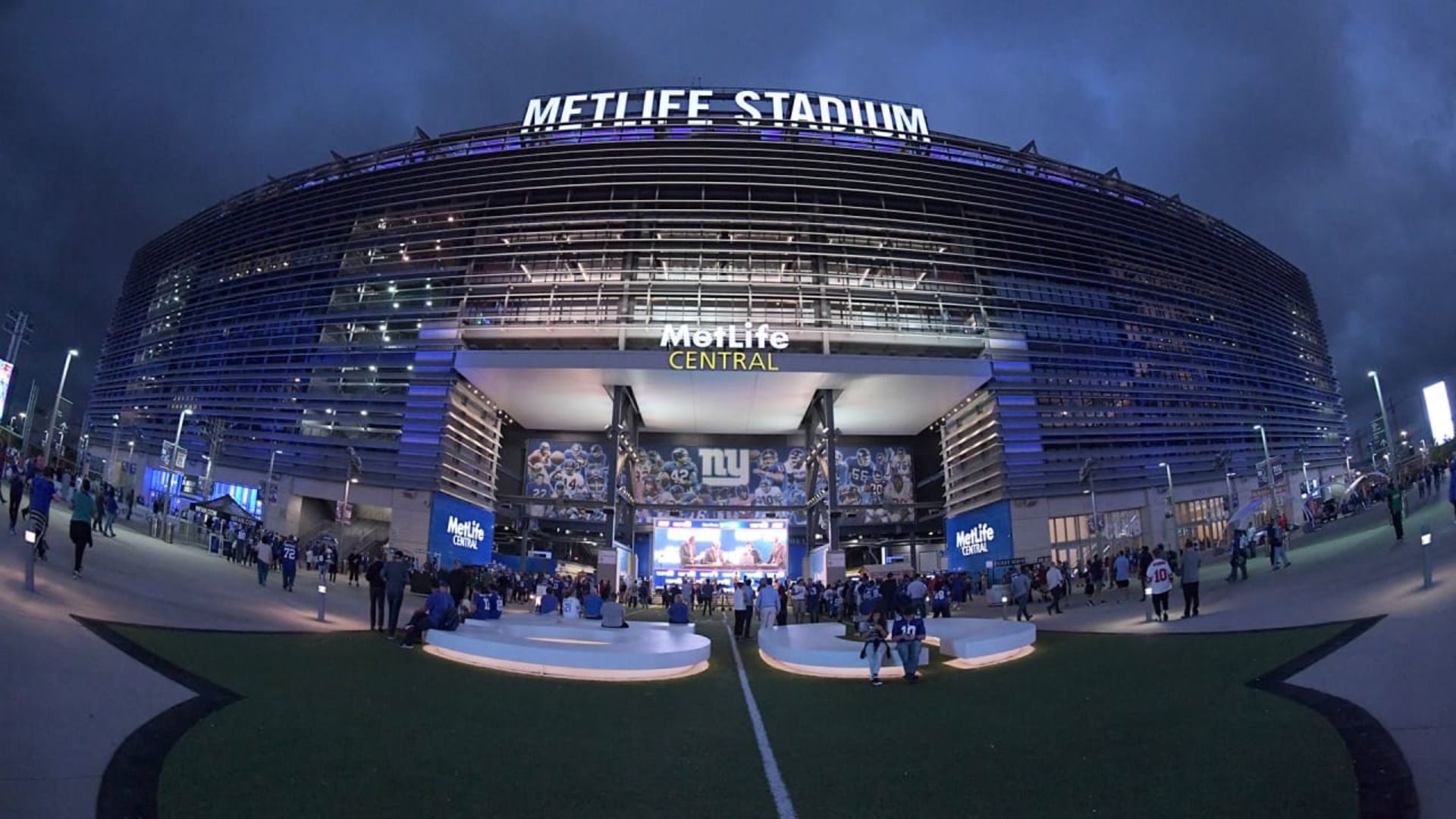
Why MetLife Stadium Presents Unique Transportation Challenges
MetLife Stadium, located in East Rutherford, New Jersey, will host some of the tournament’s most anticipated matches, including the FIFA World Cup 2026 Final. Despite its close proximity to Manhattan, transportation to the stadium is considerably more complex than many international visitors expect.
The stadium sits within the Meadowlands Sports Complex, west of the Hudson River. Reaching the venue from New York City requires crossing one of several major river crossings, including the Lincoln Tunnel, Holland Tunnel, or the George Washington Bridge, each of which regularly experiences significant congestion even under normal traffic conditions.
During the tournament, these crossings are expected to carry a substantial increase in private vehicles, charter buses, commercial transportation providers, media operations, and event-related traffic.
For visitors staying in Manhattan, travel time should never be estimated solely by distance. Although the stadium is less than ten miles from Midtown, actual travel time can vary dramatically depending on kickoff schedules, weather conditions, security operations, and traffic management measures.
Geographic Overview
MetLife Stadium occupies one of the most strategically important locations in the tournament due to its proximity to New York City while technically residing in New Jersey.
Nearby areas include:
- Manhattan
- Jersey City
- Hoboken
- Newark
- Secaucus
- Meadowlands Sports Complex
The surrounding highway network includes Interstate 95, Route 3, the New Jersey Turnpike, and several local connectors that become heavily utilized before and after major sporting events.
Estimated Travel Times
Under normal traffic conditions:
- Midtown Manhattan: approximately 25 to 35 minutes
- Lower Manhattan: approximately 30 to 40 minutes
- Newark Liberty International Airport: approximately 20 to 30 minutes
- Teterboro Airport: approximately 10 to 15 minutes
During FIFA World Cup match days:
- Midtown Manhattan: 60 to 90 minutes
- Lower Manhattan: 70 to 100 minutes
- Newark Airport: 35 to 60 minutes
Travel times may increase further during knockout matches, the Final, or periods of adverse weather.
Major Traffic Bottlenecks
Several transportation corridors consistently experience congestion before large events.
The most significant include:
- Lincoln Tunnel approaches
- Route 3 West
- New Jersey Turnpike exits serving the Meadowlands
- Interstate 95 interchange
- Stadium access roads
Post-match departures frequently require additional time due to the simultaneous movement of tens of thousands of spectators leaving the venue.
Airport Considerations
Travelers attending matches at MetLife Stadium generally arrive through one of three primary airports.
John F. Kennedy International Airport (JFK)
JFK serves the majority of international commercial arrivals. While it offers extensive global connectivity, reaching the stadium requires crossing multiple traffic corridors and can take well over ninety minutes during peak periods.
Newark Liberty International Airport (EWR)
Located in New Jersey, Newark is typically the most convenient commercial airport for visitors attending matches at MetLife Stadium. Its location reduces travel distance while avoiding several of Manhattan’s busiest corridors.
Teterboro Airport (TEB)
Teterboro remains one of the busiest business aviation airports in the world and is widely used by executives, athletes, entertainers, and corporate flight departments.
Its close proximity to the stadium makes it one of the most efficient arrival points for private aviation passengers.
Recommended Transportation Strategy
Travelers staying in Manhattan should plan to depart significantly earlier than standard navigation applications may suggest.
For premium travelers, maintaining a dedicated vehicle throughout the day offers greater flexibility, particularly after the match when transportation demand reaches its highest levels.
Visitors arriving through Teterboro benefit from one of the shortest airport-to-stadium transfers available anywhere in the tournament.
Those combining meetings in Manhattan with evening matches should also allow additional travel time for afternoon congestion entering New Jersey.
Local Area Highlights
Many visitors attending matches at MetLife Stadium choose to extend their stay by exploring nearby destinations, including:
- Midtown Manhattan
- Hudson Yards
- Times Square
- Central Park
- Fifth Avenue
- Hoboken Waterfront
- Jersey City Financial District
Combining sightseeing with match attendance often requires careful scheduling due to the time needed to travel between New York City and the stadium.
Hard Rock Stadium — Miami Gardens, Florida
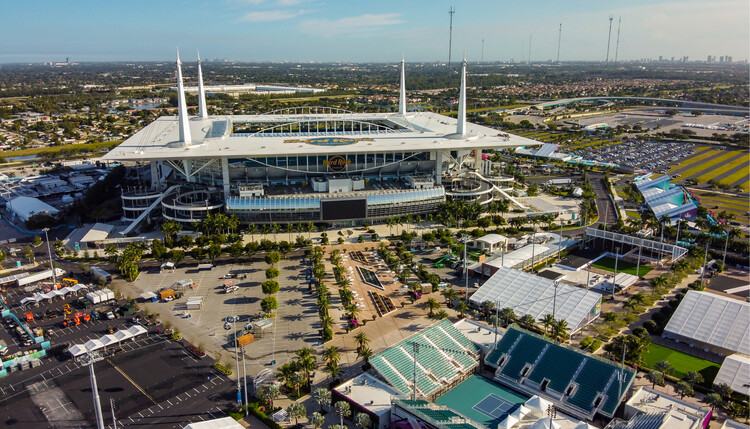
One of the Most Accessible Stadiums in South Florida—When Planned Correctly
Hard Rock Stadium occupies a strategic location between Miami and Fort Lauderdale, making it one of the most accessible venues for both domestic and international visitors. It will host several high-profile FIFA World Cup 2026 matches and is expected to attract significant numbers of international supporters throughout the tournament.
Although the stadium is located only a short drive from Downtown Miami under normal conditions, match-day transportation is heavily influenced by South Florida’s highway network, where multiple metropolitan areas converge.
Visitors often underestimate how quickly traffic volumes increase before major sporting events.
Unlike urban stadiums surrounded by hotels and pedestrian infrastructure, Hard Rock Stadium depends primarily on highway access, making departure timing one of the most important aspects of transportation planning.
Geographic Overview
Hard Rock Stadium is located in Miami Gardens, approximately midway between Downtown Miami and Fort Lauderdale.
Nearby areas include:
- Aventura
- Sunny Isles Beach
- Hallandale Beach
- Hollywood
- North Miami
- Brickell
- Downtown Miami
- Fort Lauderdale
Its position allows travelers to choose accommodations in either Miami-Dade or Broward County depending on their broader travel plans.
Estimated Travel Times
Normal traffic conditions:
- Brickell: 25 to 35 minutes
- Downtown Miami: 25 to 35 minutes
- Miami Beach: 35 to 45 minutes
- Fort Lauderdale: 25 to 35 minutes
- Aventura: 15 to 20 minutes
Expected FIFA match-day conditions:
- Brickell: 50 to 80 minutes
- Miami Beach: 60 to 90 minutes
- Fort Lauderdale: 45 to 70 minutes
Travel times vary depending on kickoff schedules and concurrent events throughout South Florida.
Primary Traffic Corridors
Several major highways serve the stadium.
The most heavily utilized include:
- Interstate 95
- Florida’s Turnpike
- State Road 826
- NW 199th Street
- NW 27th Avenue
Heavy congestion is expected near the stadium exits during the hours immediately before kickoff.
Airport Access
Hard Rock Stadium benefits from proximity to multiple airports.
Miami International Airport (MIA)
The primary gateway for international travelers arriving in South Florida.
Offers the largest selection of international flights and extensive connections throughout the Americas and Europe.
Fort Lauderdale-Hollywood International Airport (FLL)
An increasingly popular alternative offering convenient access for travelers staying north of Miami.
Opa-locka Executive Airport (OPF)
One of Florida’s leading business aviation airports.
Frequently utilized by corporate aircraft, private jet operators, and executive travelers due to its close proximity to the stadium.
Transportation Recommendations
Travelers staying in Miami Beach or Brickell should allow substantially more travel time than suggested under normal driving conditions.
Visitors combining business meetings in Downtown Miami with evening matches should schedule afternoon departures carefully to avoid peak commuter congestion.
Because weather conditions in South Florida can change rapidly, transportation plans should also account for seasonal rain showers, which frequently affect highway traffic.
Groups traveling with luggage, hospitality materials, or multiple passengers benefit from coordinated transportation rather than relying on multiple individual vehicles.
Nearby Destinations
Visitors frequently combine World Cup matches with time spent exploring:
- South Beach
- Brickell
- Wynwood
- Design District
- Bal Harbour
- Coconut Grove
- Coral Gables
- Key Biscayne
Planning these activities around match schedules helps maximize time while reducing unnecessary travel across South Florida.
Why Stadium Location Matters More Than Most Visitors Realize
One of the defining characteristics of the FIFA World Cup 2026 is the diversity of its host venues.
Although every stadium provides world-class facilities, each operates within a distinct transportation ecosystem shaped by regional geography, airport infrastructure, highway design, and local traffic patterns.
Understanding these differences before arriving allows visitors to make better decisions regarding accommodations, airport selection, departure times, and transportation planning.
The following section continues this stadium-by-stadium analysis with SoFi Stadium (Los Angeles), AT&T Stadium (Dallas), Mercedes-Benz Stadium (Atlanta), Levi’s Stadium (San Francisco Bay Area), Lumen Field (Seattle), NRG Stadium (Houston), Lincoln Financial Field (Philadelphia), Arrowhead Stadium (Kansas City), and Gillette Stadium (Boston), completing the most comprehensive transportation guide for the FIFA World Cup 2026 in the United States.
SoFi Stadium — Los Angeles, California
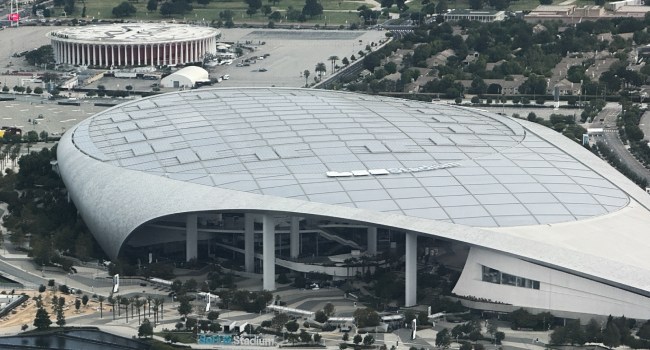
Navigating One of the World’s Largest Metropolitan Areas During the FIFA World Cup
SoFi Stadium, located in Inglewood, California, represents one of the most modern sports and entertainment venues in the world. During the FIFA World Cup 2026, it will host some of the tournament’s highest-profile matches while welcoming hundreds of thousands of international visitors to the greater Los Angeles region.
Unlike many host cities with clearly defined downtown districts, Los Angeles operates as a vast metropolitan area composed of interconnected neighborhoods, business centers, entertainment districts, and residential communities. This decentralized layout creates unique transportation challenges, as visitors often travel from very different parts of the city before converging on the stadium.
Distance alone rarely reflects actual travel time. A journey of only a few miles may require significantly longer during periods of heavy traffic, particularly when combined with event-related road management and increased airport activity.
Geographic Overview
SoFi Stadium is located in Inglewood, southwest of Downtown Los Angeles and only a short distance from Los Angeles International Airport (LAX).
Popular accommodation areas include:
- Beverly Hills
- Santa Monica
- West Hollywood
- Downtown Los Angeles
- Marina del Rey
- Manhattan Beach
- Culver City
Each offers a different balance between entertainment, hotel availability, and travel time to the stadium.
Estimated Travel Times
Typical conditions:
- LAX: 15 to 20 minutes
- Beverly Hills: 25 to 35 minutes
- Santa Monica: 25 to 40 minutes
- Downtown Los Angeles: 30 to 40 minutes
Expected FIFA match-day conditions:
- LAX: 30 to 60 minutes
- Beverly Hills: 45 to 75 minutes
- Santa Monica: 45 to 80 minutes
- Downtown Los Angeles: 60 to 90 minutes
Travel times can increase substantially depending on kickoff schedules and concurrent events throughout Los Angeles County.
Primary Traffic Corridors
Access to the stadium depends heavily on several major highways, including:
- Interstate 405
- Interstate 105
- Interstate 110
- Century Boulevard
- Prairie Avenue
These routes regularly experience congestion during major sporting events and are expected to operate under enhanced traffic management throughout the tournament.
Airport Options
Visitors attending matches at SoFi Stadium typically arrive through one of several airports.
Los Angeles International Airport (LAX)
The region’s primary international gateway and the closest major commercial airport to the stadium.
Hollywood Burbank Airport (BUR)
A convenient option for domestic travelers staying in northern Los Angeles.
Van Nuys Airport (VNY)
One of the busiest business aviation airports in the United States, frequently serving executives, entertainers, and private aircraft during major events.
Transportation Strategy
Travelers should avoid scheduling tight itineraries between airport arrivals and kickoff.
Visitors attending hospitality events before matches should consider allowing additional time for movement between hotels, restaurants, and the stadium, particularly during afternoon traffic.
Given the scale of the Los Angeles metropolitan area, coordinated transportation significantly reduces uncertainty and improves schedule reliability.
AT&T Stadium — Arlington, Texas
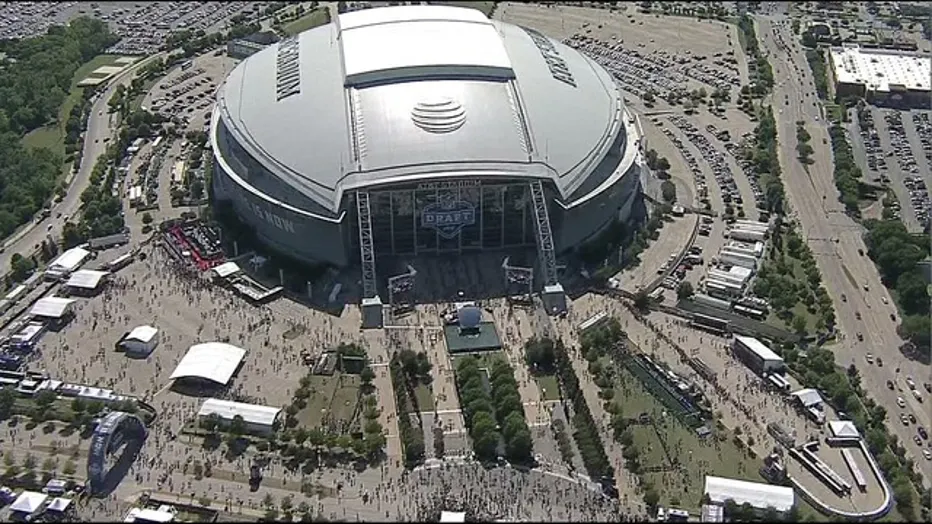
A Stadium Positioned Between Two Major Cities
AT&T Stadium occupies a unique position within the Dallas–Fort Worth metropolitan area.
Rather than being located in either downtown Dallas or downtown Fort Worth, the stadium sits in Arlington, requiring most visitors to travel via major interstate highways regardless of where they are staying.
This geographic location makes transportation planning particularly important during the FIFA World Cup, when simultaneous arrivals from both metropolitan centers will increase traffic throughout the region.
Geographic Overview
Nearby destinations include:
- Downtown Dallas
- Downtown Fort Worth
- Las Colinas
- Grapevine
- Irving
- Arlington Entertainment District
Visitors frequently combine matches with business activities across multiple cities within the metroplex.
Estimated Travel Times
Normal conditions:
- Downtown Dallas: 30 to 35 minutes
- Downtown Fort Worth: 20 to 30 minutes
- DFW International Airport: 20 to 30 minutes
Expected FIFA conditions:
- Downtown Dallas: 60 to 90 minutes
- Downtown Fort Worth: 45 to 75 minutes
- DFW Airport: 40 to 70 minutes
Primary Traffic Corridors
Key transportation routes include:
- Interstate 30
- State Highway 360
- Interstate 20
- Collins Street
- Randol Mill Road
Traffic typically builds several hours before kickoff and remains heavy following the conclusion of matches.
Airport Access
Primary arrival airports include:
- Dallas/Fort Worth International Airport (DFW)
- Dallas Love Field (DAL)
- Addison Airport (ADS) for private aviation
Transportation Strategy
Visitors attending matches while staying in Dallas should account for commuter traffic before event-related congestion begins.
Groups attending hospitality programs within Arlington often benefit from maintaining transportation throughout the day rather than arranging multiple individual transfers.
Mercedes-Benz Stadium — Atlanta, Georgia
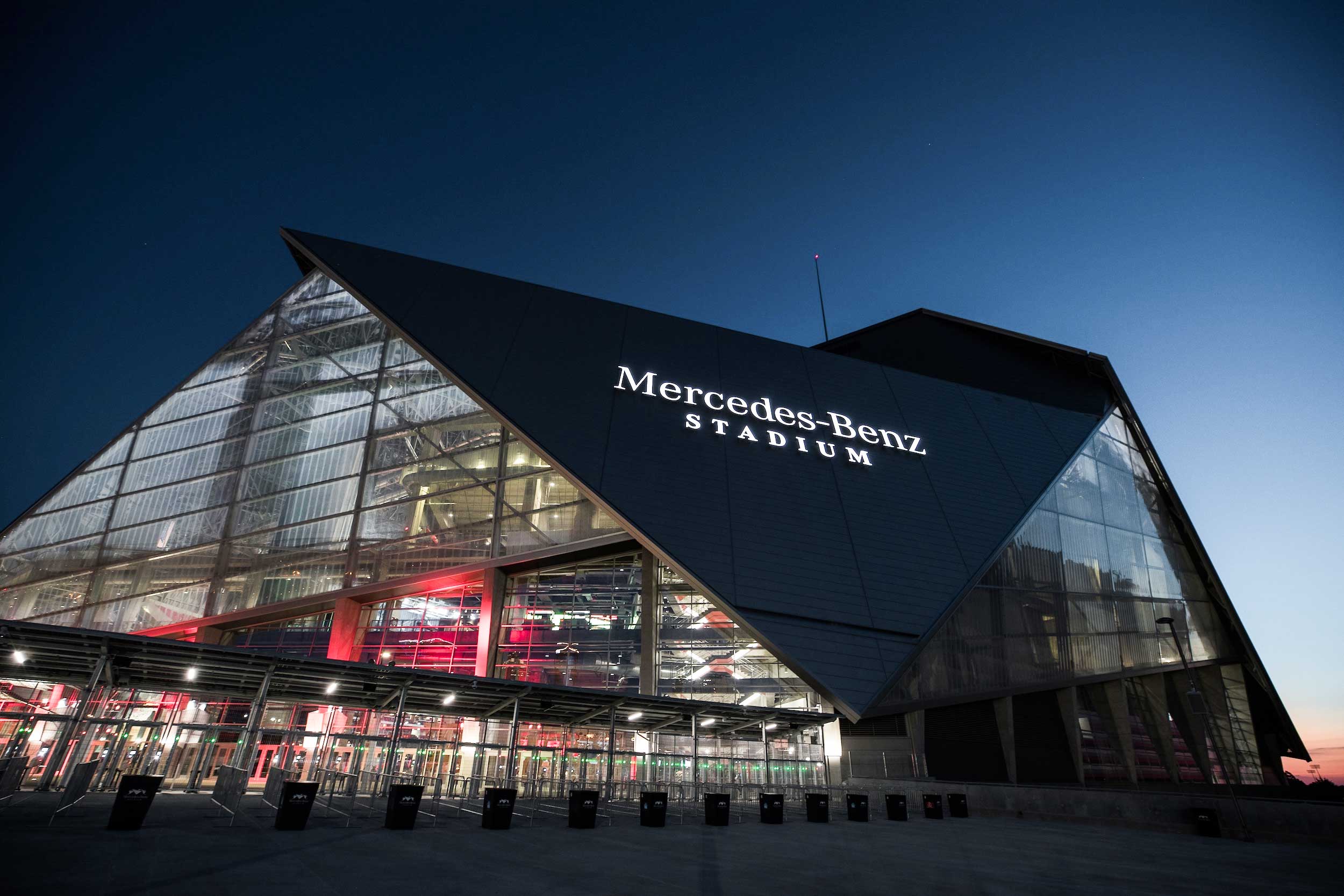
A Downtown Stadium Within One of America’s Busiest Transportation Networks
Unlike many tournament venues located outside city centers, Mercedes-Benz Stadium sits in the heart of Downtown Atlanta.
Its central location provides excellent proximity to hotels, convention facilities, and entertainment districts while simultaneously placing visitors within one of the busiest highway systems in the southeastern United States.
Geographic Overview
Nearby districts include:
- Downtown Atlanta
- Buckhead
- Midtown
- Centennial Olympic Park
- Georgia World Congress Center
Estimated Travel Times
Normal conditions:
- Buckhead: 20 minutes
- Midtown: 15 minutes
- Hartsfield-Jackson Airport: 20 minutes
Expected FIFA conditions:
- Buckhead: 40 to 60 minutes
- Midtown: 30 to 50 minutes
- Airport: 35 to 60 minutes
Major Traffic Corridors
Important routes include:
- Interstate 75
- Interstate 85
- Interstate 20
- Northside Drive
- Centennial Olympic Park Drive
These corridors frequently experience congestion during sporting events and conventions.
Airport Access
Atlanta benefits from one of the world’s busiest airports.
Hartsfield-Jackson Atlanta International Airport (ATL)
Provides extensive domestic and international connectivity with relatively short driving distances to Downtown Atlanta.
Transportation Strategy
Visitors should expect heavy pedestrian activity surrounding the stadium.
Allowing additional time for the final approach is recommended, particularly during knockout rounds.
Levi’s Stadium — Santa Clara, California
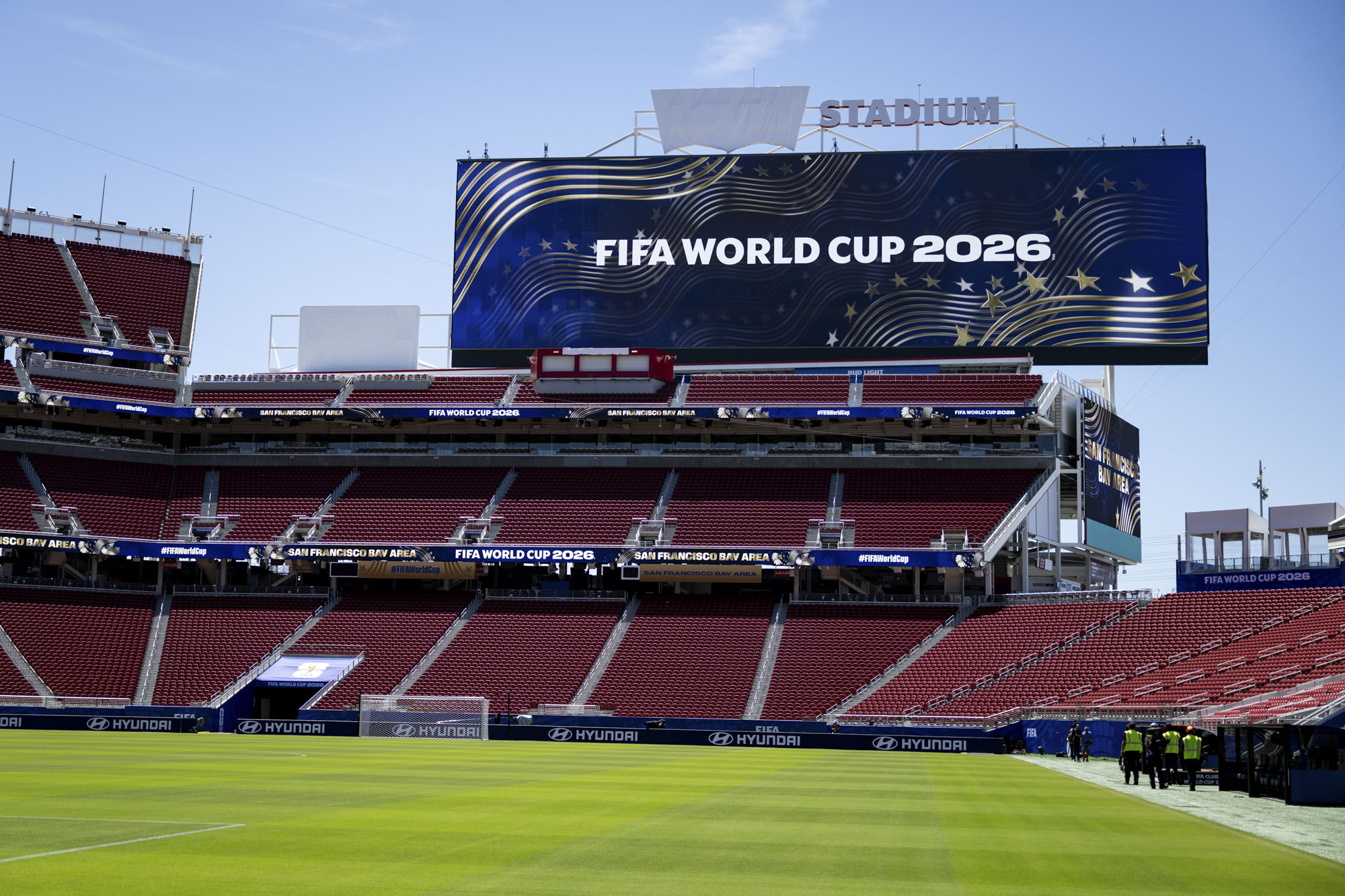
Understanding Bay Area Transportation During the Tournament
Although commonly associated with San Francisco, Levi’s Stadium is actually located in Santa Clara, at the center of Silicon Valley.
Many international visitors choose accommodations in San Francisco without realizing the stadium is approximately forty-five miles away.
This distinction has major implications for transportation planning.
Geographic Overview
Nearby destinations include:
- Santa Clara
- San Jose
- Palo Alto
- Mountain View
- Cupertino
- Downtown San Francisco
Estimated Travel Times
Normal conditions:
- San Jose: 15 minutes
- Palo Alto: 20 minutes
- San Francisco: 50 to 60 minutes
Expected FIFA conditions:
- San Jose: 30 minutes
- Palo Alto: 45 minutes
- San Francisco: 90 to 120 minutes
Airport Access
Primary airports include:
- San Jose Mineta International Airport (SJC)
- San Francisco International Airport (SFO)
- Oakland International Airport (OAK)
Transportation Strategy
Visitors staying in San Francisco should plan significantly earlier departures than standard navigation estimates suggest.
Those prioritizing shorter travel times may consider accommodations closer to Silicon Valley during match days.
Why Regional Geography Shapes Every Transportation Decision
Although each stadium hosts the same tournament, no two transportation environments are identical.
Some venues benefit from central urban locations with nearby hotels and business districts, while others require longer highway journeys from major metropolitan areas. Airport access, roadway design, and local infrastructure all influence how visitors should organize their schedules.
Recognizing these differences before arrival allows travelers to choose accommodations more strategically, estimate realistic travel times, and reduce unnecessary uncertainty throughout the tournament.
The next section completes the United States stadium guide with Lumen Field (Seattle), NRG Stadium (Houston), Lincoln Financial Field (Philadelphia), Arrowhead Stadium (Kansas City), and Gillette Stadium (Boston), followed by a comparative logistics reference that helps visitors evaluate every host venue at a glance.
Lumen Field — Seattle, Washington
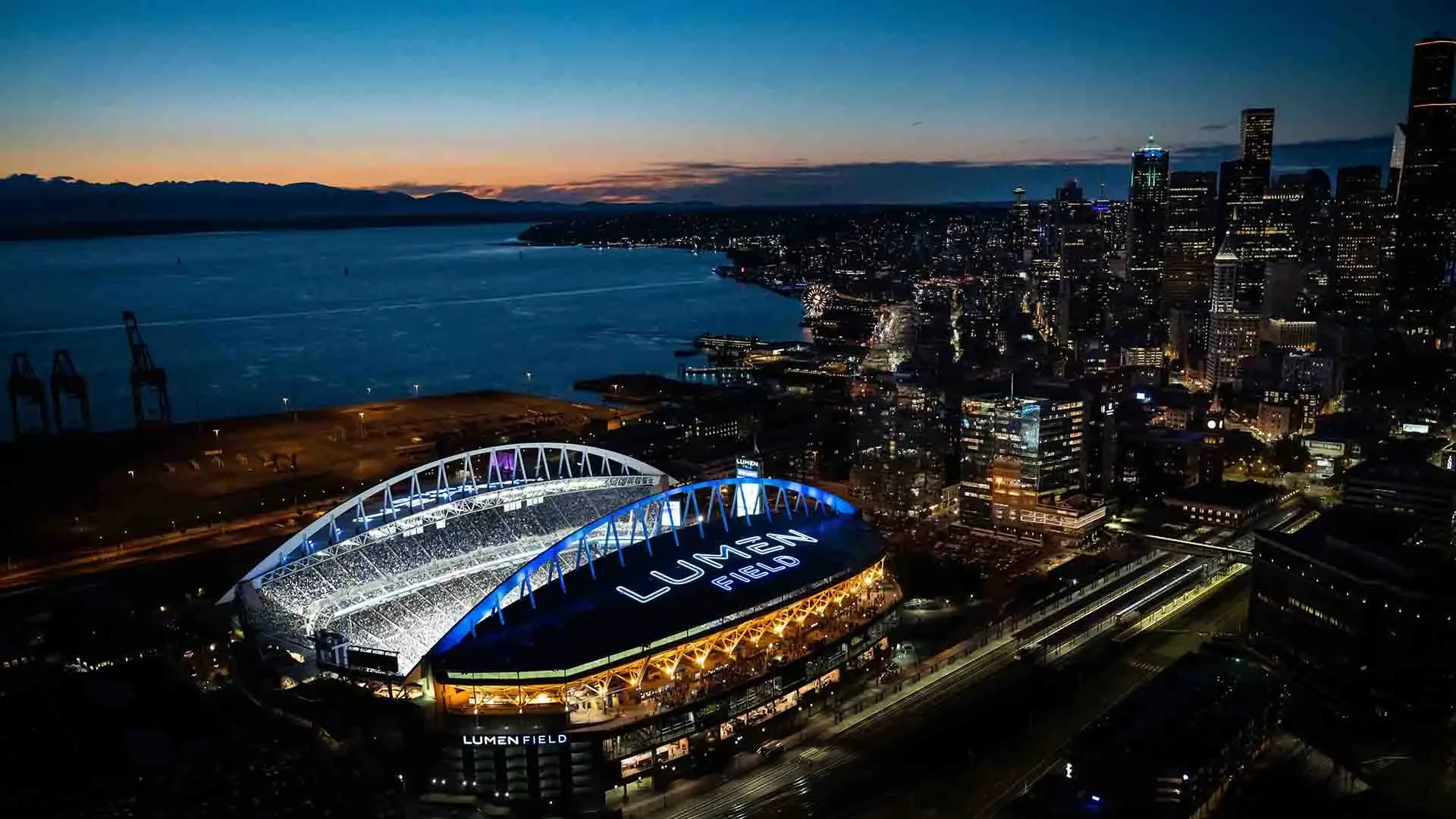
An Urban Stadium with Unique Access Considerations
Lumen Field is one of the most centrally located venues of the FIFA World Cup 2026. Situated in Seattle’s SoDo district, just south of Downtown Seattle, the stadium benefits from close proximity to hotels, business centers, cruise terminals, and major attractions.
Although distances are relatively short compared to other host cities, match-day transportation still requires careful planning. Seattle’s geography—bounded by Puget Sound, Lake Washington, and several bridges—naturally funnels traffic through a limited number of transportation corridors.
Combined with commuter traffic and event-related road management, these constraints can significantly increase travel times during major matches.
Geographic Overview
Lumen Field is conveniently located near several of Seattle’s most popular neighborhoods and commercial districts, including:
- Downtown Seattle
- Pioneer Square
- Belltown
- South Lake Union
- Bellevue
- SoDo
- Capitol Hill
Visitors staying downtown generally enjoy shorter travel distances than in most other World Cup host cities.
Estimated Travel Times
Typical conditions:
- Downtown Seattle: 10 to 15 minutes
- Bellevue: 20 to 25 minutes
- Seattle-Tacoma International Airport (SEA): 20 to 25 minutes
Expected FIFA match-day conditions:
- Downtown Seattle: 20 to 35 minutes
- Bellevue: 35 to 55 minutes
- SEA Airport: 35 to 50 minutes
Pedestrian activity surrounding the stadium should also be considered when estimating arrival times.
Primary Traffic Corridors
Key access routes include:
- Interstate 5
- Interstate 90
- State Route 99
- Edgar Martinez Drive
- Fourth Avenue South
Temporary traffic controls and pedestrian-only zones are likely during high-attendance matches.
Airport Access
Seattle-Tacoma International Airport (SEA) serves as the region’s primary commercial airport and provides excellent domestic and international connectivity.
Private aviation travelers may also utilize nearby business aviation facilities depending on aircraft size and operational requirements.
Transportation Strategy
Because the stadium is located within the urban core, travelers should prioritize arrival time over driving distance.
Even relatively short journeys may require additional time due to traffic control measures and increased pedestrian volumes around the venue.
NRG Stadium — Houston, Texas
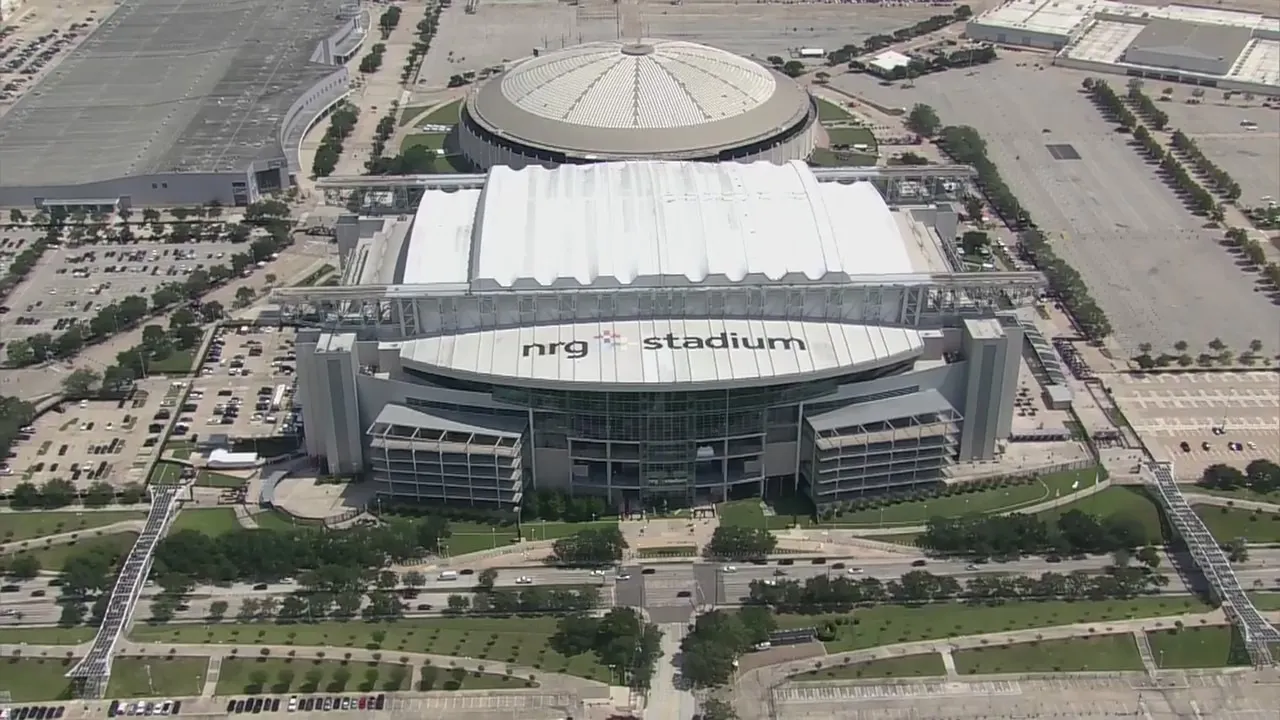
A Stadium Designed Around Highway Access
NRG Stadium sits within the expansive NRG Park complex, one of the largest event campuses in Texas.
Unlike downtown stadiums that benefit from surrounding hotels and walkable neighborhoods, NRG Stadium primarily depends on Houston’s highway network.
As one of America’s largest metropolitan areas, Houston presents unique transportation challenges due to its extensive road system and decentralized urban layout.
Geographic Overview
Nearby districts include:
- Downtown Houston
- Uptown
- The Galleria
- Texas Medical Center
- Museum District
- West University
These areas serve as popular accommodation choices for both leisure and business travelers.
Estimated Travel Times
Typical conditions:
- Downtown Houston: 20 minutes
- The Galleria: 20 minutes
- George Bush Intercontinental Airport: 40 to 50 minutes
Expected FIFA conditions:
- Downtown Houston: 40 to 60 minutes
- The Galleria: 45 to 70 minutes
- Airport: 60 to 90 minutes
Primary Traffic Corridors
Major routes include:
- Interstate 610
- State Highway 288
- Interstate 69
- Main Street
- Kirby Drive
Traffic volumes increase substantially before large sporting events.
Airport Access
Houston is served by two major commercial airports:
George Bush Intercontinental Airport (IAH)
The primary international gateway for long-haul flights.
William P. Hobby Airport (HOU)
Often preferred for domestic travel within the United States.
Transportation Strategy
Visitors attending multiple business meetings before matches should avoid scheduling appointments too close to kickoff.
Houston’s highway network can become unpredictable during afternoon peak traffic, making additional travel time an essential part of itinerary planning.
Lincoln Financial Field — Philadelphia, Pennsylvania
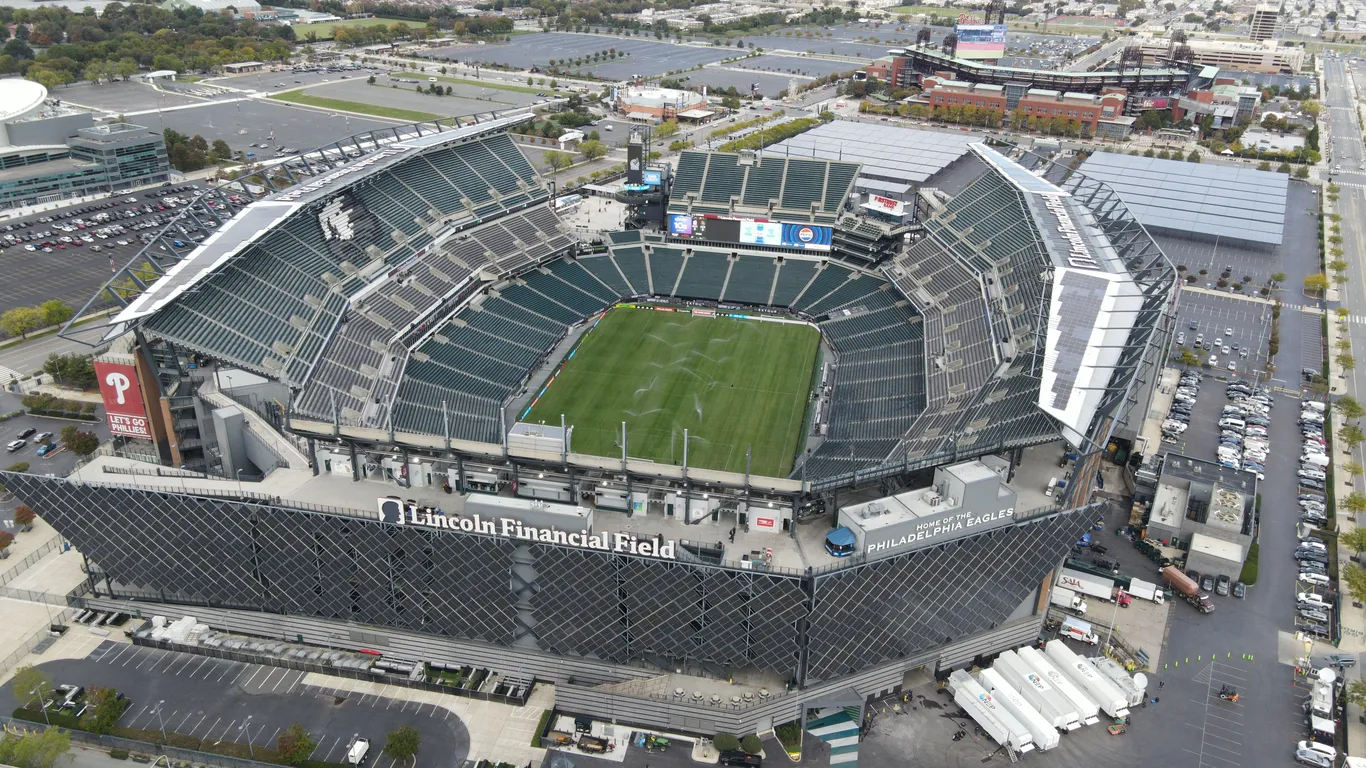
A Key Venue Along the Northeast Corridor
Lincoln Financial Field is located within the South Philadelphia Sports Complex, one of the most established sports districts in the United States.
Its position makes Philadelphia particularly attractive for visitors combining multiple destinations throughout the Northeast, including New York City, Washington, D.C., and Boston.
Geographic Overview
Nearby areas include:
- Center City
- University City
- Old City
- Rittenhouse Square
- South Philadelphia
- Navy Yard
Estimated Travel Times
Normal conditions:
- Center City: 15 minutes
- Philadelphia International Airport: 20 minutes
Expected FIFA conditions:
- Center City: 30 to 50 minutes
- Airport: 35 to 55 minutes
Travelers arriving from New York or Washington should allow additional flexibility for interstate traffic.
Primary Traffic Corridors
Major access routes include:
- Interstate 95
- Interstate 76
- Broad Street
- Pattison Avenue
These corridors serve both commuters and event traffic, increasing congestion during major matches.
Airport Access
Philadelphia International Airport (PHL) provides extensive domestic service together with international connections to Europe and other global destinations.
Transportation Strategy
Philadelphia offers one of the most convenient locations for visitors planning multi-city itineraries across the northeastern United States.
Travelers should nevertheless account for increased traffic around the Sports Complex during match days.
Arrowhead Stadium — Kansas City, Missouri
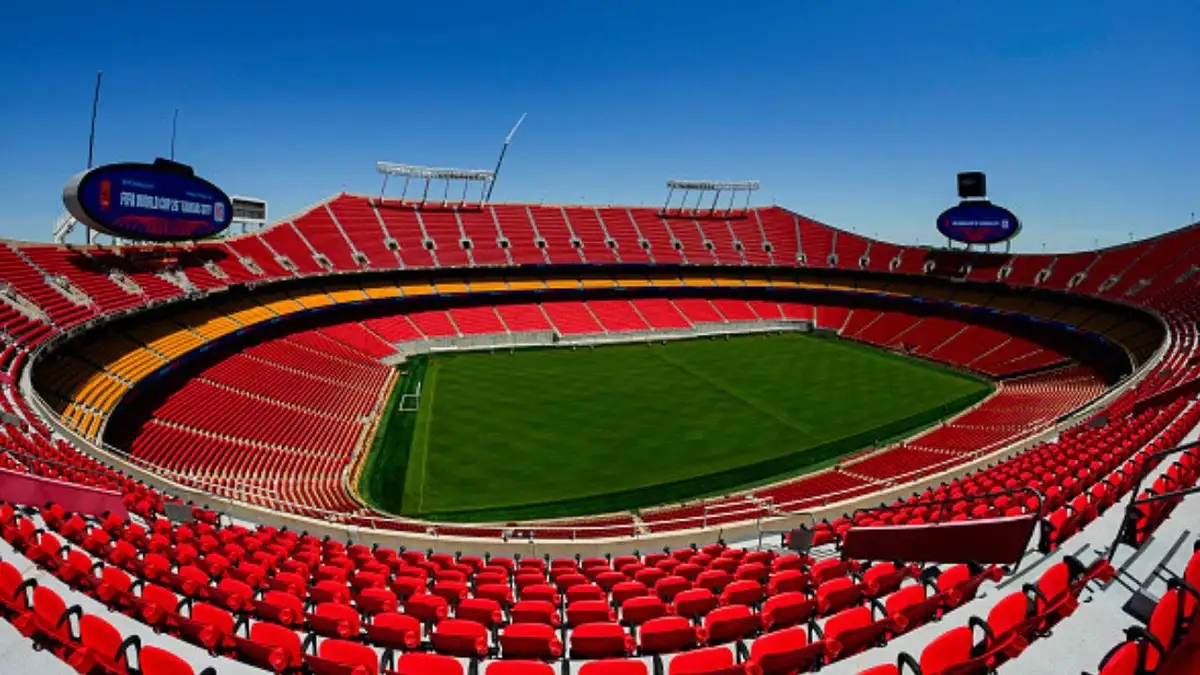
One of America’s Most Iconic Football Venues
Arrowhead Stadium, part of the Truman Sports Complex, is internationally recognized for its passionate sporting atmosphere.
For FIFA World Cup visitors, however, its suburban location creates transportation dynamics that differ considerably from downtown stadiums.
The surrounding area is dominated by large parking facilities connected primarily through interstate highways.
Geographic Overview
Nearby districts include:
- Downtown Kansas City
- Country Club Plaza
- Crown Center
- Independence
- Blue Springs
Estimated Travel Times
Typical conditions:
- Downtown Kansas City: 15 to 20 minutes
- Country Club Plaza: 20 minutes
Expected FIFA conditions:
- Downtown: 40 to 60 minutes
- Plaza District: 45 to 65 minutes
Primary Traffic Corridors
Important routes include:
- Interstate 70
- Interstate 435
- Blue Ridge Cutoff
Large parking operations contribute to slower departures after major events.
Airport Access
Kansas City International Airport (MCI) provides convenient access for domestic travelers while continuing to expand international connectivity.
Transportation Strategy
Visitors should anticipate longer departure times after matches due to the concentration of vehicles exiting the Truman Sports Complex simultaneously.
Gillette Stadium — Foxborough, Massachusetts
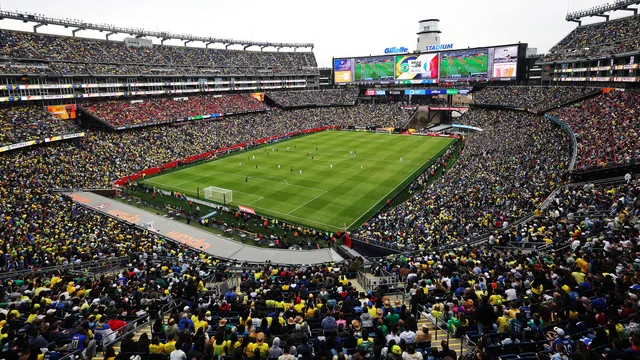
The Most Isolated Stadium of the Tournament
Gillette Stadium occupies a distinctive position among the eleven United States host venues.
Located in Foxborough, approximately midway between Boston and Providence, the stadium is surrounded primarily by suburban and semi-rural road networks rather than dense urban infrastructure.
This geographic setting creates one of the tournament’s most challenging transportation environments.
Geographic Overview
Nearby destinations include:
- Downtown Boston
- Back Bay
- Cambridge
- Providence
- Dedham
- Foxborough
Most visitors choose accommodations in either Boston or Providence.
Estimated Travel Times
Typical conditions:
- Downtown Boston: 40 minutes
- Providence: 35 minutes
Expected FIFA conditions:
- Boston: 70 to 110 minutes
- Providence: 60 to 90 minutes
Travel times are heavily influenced by congestion along Route 1.
Primary Traffic Corridors
Critical access routes include:
- Interstate 95
- Interstate 495
- U.S. Route 1
Because Route 1 serves as the primary approach to the stadium, traffic builds steadily throughout match days.
Airport Access
Primary airports include:
Boston Logan International Airport (BOS)
The principal gateway for international visitors attending matches in Massachusetts.
Rhode Island T. F. Green International Airport (PVD)
An excellent alternative for travelers staying closer to Providence.
Transportation Strategy
Visitors should avoid relying on last-minute transportation following matches.
Due to the stadium’s location and limited surrounding infrastructure, demand for transportation services is expected to remain high well after the final whistle.
Building transportation into the itinerary before arriving in Massachusetts provides significantly greater flexibility and predictability.
Comparing Transportation Across All U.S. Host Stadiums
Although every FIFA World Cup venue offers a unique experience, transportation complexity varies considerably between cities.
Several factors influence the overall travel experience, including:
- Distance between airports and stadiums.
- Highway dependence.
- Availability of alternate routes.
- Urban density.
- Hotel distribution.
- Public transportation integration.
- Event-related traffic management.
- Security perimeters.
- Regional geography.
Understanding these differences before finalizing travel plans allows visitors to make more informed decisions regarding accommodations, airport selection, departure schedules, and ground transportation.
The next section of this guide shifts from individual stadium analysis to a broader logistical perspective, examining airport operations, private aviation, Fixed Base Operators (FBOs), regional transportation networks, and intercity travel strategies. These elements play an equally important role in building a successful FIFA World Cup 2026 itinerary, particularly for travelers attending matches in multiple host cities or combining leisure, business, and hospitality programs throughout the tournament.
Airports, Private Aviation & Long-Distance Transportation During the FIFA World Cup 2026
Why Airport Planning Is Just as Important as Stadium Planning
For most international visitors, the FIFA World Cup 2026 experience begins long before arriving at a stadium. It starts at the airport.
Whether traveling on a commercial airline or aboard a private aircraft, airport operations will influence every subsequent stage of the journey, including hotel check-in, business meetings, hospitality events, stadium arrival times, and connections to other host cities.
Many travelers devote significant time to choosing flights and accommodations while giving comparatively little attention to ground transportation. During the tournament, however, this final segment of the journey may become one of the most unpredictable if it is not planned in advance.
The combination of increased passenger volumes, temporary security measures, international arrivals, media operations, corporate hospitality programs, and private aviation activity is expected to place unprecedented pressure on airports throughout North America.
Understanding how each airport fits into the broader transportation network allows visitors to make more informed travel decisions and build realistic itineraries from the very beginning of their trip.
Understanding the Airport Network Across U.S. Host Cities
Unlike previous FIFA World Cups held within relatively compact geographic regions, the United States offers multiple airport options for nearly every host city.
This provides greater flexibility but also requires more careful planning.
Selecting the nearest airport does not always produce the fastest journey.
In many cases, airport congestion, hotel location, traffic conditions, or onward travel plans make an alternative airport a more practical choice.
Travelers should evaluate airports based on:
- Distance to accommodations.
- Distance to stadiums.
- International flight availability.
- Domestic connections.
- Private aviation facilities.
- Traffic patterns.
- Rental car demand.
- Ground transportation accessibility.
Considering these factors together often produces a more efficient itinerary than focusing solely on airfare.
Major International Airports Serving the FIFA World Cup
Several airports will function as primary international gateways during the tournament.
Miami International Airport (MIA)
Miami International Airport is expected to serve one of the highest volumes of international football supporters, particularly from Latin America, Europe, and the Caribbean.
Its extensive route network makes it the preferred arrival point for many visitors attending matches in South Florida.
Advantages include:
- Exceptional international connectivity.
- Extensive hotel inventory nearby.
- Direct access to major highways.
- Strong business aviation ecosystem.
Potential challenges include increased customs processing times and heavy curbside congestion during peak arrival periods.
Fort Lauderdale-Hollywood International Airport (FLL)
Located north of Miami, Fort Lauderdale-Hollywood International Airport offers an attractive alternative for travelers staying near Fort Lauderdale, Hollywood, Aventura, or northern Miami-Dade County.
Choosing FLL instead of MIA may reduce overall travel time depending on hotel location.
Los Angeles International Airport (LAX)
LAX remains one of the busiest international airports in the world.
Its proximity to SoFi Stadium is advantageous, but traffic conditions throughout Los Angeles can significantly influence actual transfer times.
Travelers should avoid scheduling tight connections between flight arrivals and match kickoffs.
Dallas/Fort Worth International Airport (DFW)
DFW serves as one of the world’s largest airline hubs and offers excellent connectivity across North America, Europe, Asia, and Latin America.
Its central location within the Dallas–Fort Worth Metroplex makes it an efficient arrival point for visitors attending matches at AT&T Stadium.
Hartsfield-Jackson Atlanta International Airport (ATL)
Frequently recognized as one of the busiest airports globally, ATL provides exceptional domestic connectivity while remaining relatively close to Downtown Atlanta.
Its efficiency and extensive flight network make it a key transportation hub throughout the tournament.
Seattle-Tacoma International Airport (SEA)
Seattle-Tacoma International Airport offers strong connectivity across North America and the Pacific region.
Its location provides relatively convenient access to Downtown Seattle and Lumen Field.
Boston Logan International Airport (BOS)
Boston Logan serves as the principal gateway for visitors attending matches at Gillette Stadium.
Although the airport itself is close to Downtown Boston, travelers should remember that the stadium is located in Foxborough, requiring additional travel time.
Newark Liberty International Airport (EWR)
For many international visitors attending matches at MetLife Stadium, Newark often represents the most efficient commercial airport.
Its location in New Jersey avoids several of Manhattan’s most congested access routes.
Private Aviation During the FIFA World Cup
The FIFA World Cup traditionally generates a substantial increase in private aviation activity.
Corporate sponsors, national football federations, professional athletes, entertainers, investors, government delegations, and high-net-worth individuals frequently utilize business aircraft throughout the tournament.
Unlike commercial aviation, private flights operate according to highly individualized schedules that may change with limited notice.
Ground transportation supporting these operations must therefore remain flexible enough to accommodate early arrivals, delayed departures, aircraft repositioning, customs procedures, and itinerary adjustments.
Coordinating transportation with flight departments and FBO personnel becomes particularly important during periods of peak airport activity.
Understanding Fixed Base Operators (FBOs)
Visitors unfamiliar with private aviation may not recognize the role of Fixed Base Operators, commonly known as FBOs.
Rather than using commercial passenger terminals, private aircraft typically arrive at dedicated aviation facilities that provide services such as:
- Aircraft parking.
- Customs coordination.
- Passenger lounges.
- Crew facilities.
- Fuel services.
- Flight planning.
- Executive ground transportation access.
Because FBOs operate separately from commercial terminals, they often provide faster arrivals, greater privacy, and more direct access to waiting vehicles.
For business travelers and private aviation clients, this significantly reduces transfer times while improving operational efficiency.
Major Business Aviation Airports Near FIFA Host Cities
Several airports are expected to experience increased private aviation activity throughout the tournament.
These include:
New York Region
- Teterboro Airport (TEB)
- Westchester County Airport (HPN)
South Florida
- Opa-locka Executive Airport (OPF)
- Fort Lauderdale Executive Airport (FXE)
- Boca Raton Airport (BCT)
Los Angeles
- Van Nuys Airport (VNY)
- Hawthorne Municipal Airport (HHR)
Dallas
- Addison Airport (ADS)
- Dallas Love Field (DAL)
Silicon Valley
- San Jose Mineta International Airport (business aviation facilities)
- Palo Alto Airport (PAO)
Selecting the most appropriate arrival airport depends on aircraft type, final destination, customs requirements, and overall itinerary.
Traveling Between Host Cities
One of the defining characteristics of the FIFA World Cup 2026 is the distance separating host markets.
Many supporters will attend matches in multiple cities over several weeks.
Building an efficient itinerary requires balancing air travel with ground transportation.
Factors to evaluate include:
- Match schedules.
- Flight frequency.
- Airport location.
- Hotel availability.
- Business commitments.
- Ground transportation after arrival.
In some cases, flights represent the fastest option.
In others, direct chauffeur transportation between nearby cities may provide a more comfortable and equally efficient alternative.
Regional Ground Transportation Corridors
Several host markets are connected by road networks that make long-distance chauffeur service a practical option.
Examples include:
New York City ↔ Philadelphia
Approximately two hours under favorable traffic conditions.
An attractive alternative for travelers wishing to avoid airport procedures.
Boston ↔ New York City
Frequently chosen by executives combining meetings with World Cup matches.
Ground transportation offers uninterrupted productivity throughout the journey.
Miami ↔ Orlando
Visitors extending their stay in Florida often combine World Cup matches with leisure travel.
Private ground transportation provides flexibility while avoiding airport transfers for relatively short regional journeys.
Dallas ↔ Houston
An important corridor connecting two of Texas’ largest metropolitan areas.
Travel time varies according to traffic and departure schedules.
San Francisco ↔ Silicon Valley
Although geographically close, congestion along Highway 101 and Interstate 280 should be considered when planning travel to Levi’s Stadium.
Coordinating Multi-City Itineraries
Many international visitors will not remain in a single destination throughout the tournament.
A typical itinerary may include:
- Arrival in New York.
- Match at MetLife Stadium.
- Flight to Miami.
- Several days in South Florida.
- Transfer to Dallas.
- Business meetings in Houston.
- Final match in Los Angeles.
Managing transportation independently in each city increases operational complexity.
Developing a unified transportation strategy before departure creates greater consistency while reducing uncertainty across the entire journey.
This becomes particularly valuable for corporate hospitality programs, international media organizations, family offices, private aviation clients, and executive delegations.
Transportation Planning Begins Before Departure
One of the most common planning mistakes is treating each transportation segment as an isolated reservation.
Successful World Cup travel requires a broader perspective.
Flights, airports, hotels, stadiums, business commitments, sightseeing activities, and transfers should function as a single integrated itinerary rather than a series of unrelated bookings.
When transportation planning begins early, travelers gain greater flexibility in selecting airports, choosing accommodations, coordinating arrival times, and adapting to operational changes throughout the tournament.
The next section of this guide focuses on building a complete transportation strategy, including vehicle selection, recommended fleet categories, planning timelines, operational checklists, and practical recommendations for every type of traveler attending the FIFA World Cup 2026.
Building the Perfect Transportation Strategy for the FIFA World Cup 2026
Transportation Should Be Planned as Part of Your Entire Journey
One of the biggest mistakes travelers make when planning a major international event is treating transportation as a last-minute reservation.
For everyday travel, this approach may work reasonably well. During the FIFA World Cup 2026, however, transportation should be considered one of the first elements of the itinerary, alongside flights, accommodations, and match tickets.
Every transportation decision influences the next stage of the journey.
The airport selected affects hotel options.
Hotel location affects stadium travel times.
Match schedules influence departure planning.
Business meetings determine vehicle availability.
Flights between host cities shape the overall itinerary.
Rather than viewing transportation as a collection of individual transfers, experienced travelers plan mobility as one integrated strategy.
Doing so creates a more predictable schedule, reduces unnecessary stress, and minimizes the impact of unexpected delays throughout the tournament.
Start Planning Before You Book Your Flights
Many visitors naturally begin by comparing airfare.
While flight pricing is important, selecting flights without considering transportation logistics can create unnecessary complications later.
Before confirming flights, travelers should evaluate:
- Which stadiums they plan to visit.
- Which airports provide the most convenient access.
- Hotel availability near each venue.
- Internal flights between host cities.
- Business commitments.
- Sightseeing plans.
- Arrival and departure times.
Sometimes a slightly more expensive flight results in significantly lower transportation costs and a much smoother travel experience.
Planning these elements together produces a more efficient itinerary.
Selecting the Right Hotel
Choosing accommodations solely based on price or hotel rating may not be the best strategy during the World Cup.
Location often has a greater impact on the overall experience.
When comparing hotels, consider:
- Distance from the stadium.
- Distance from the airport.
- Nearby restaurants.
- Business districts.
- Evening activities.
- Highway accessibility.
- Security.
- Travel time during peak traffic.
For example, a luxury hotel located twenty minutes farther from the stadium may add several hours of additional travel throughout the tournament.
The objective should be minimizing daily logistical complexity rather than minimizing the room rate alone.
Understanding Match-Day Timing
Arriving too early may reduce flexibility.
Arriving too late increases stress.
Finding the right balance is essential.
Several variables influence departure times:
- Stadium security procedures.
- Ticket verification.
- Pedestrian screening.
- Temporary road closures.
- Parking restrictions.
- Hospitality events.
- Weather.
- Peak traffic periods.
For high-demand matches, arriving three to four hours before kickoff generally provides the greatest flexibility.
This allows sufficient time for transportation, security, hospitality activities, merchandise shopping, food service, and stadium navigation without rushing.
Transportation Timeline
The following planning timeline helps organize transportation well before arriving in the United States.
90–120 Days Before Departure
Finalize:
- Match schedule.
- Host cities.
- Flights.
- Hotels.
- Initial transportation strategy.
Large corporate groups should also begin estimating vehicle requirements during this period.
60–90 Days Before Departure
Review:
- Flight confirmations.
- Hotel reservations.
- Internal transportation.
- Airport transfer requirements.
- Business meetings.
- Hospitality events.
This is an excellent stage to confirm transportation availability before demand increases.
30 Days Before Departure
Verify:
- Flight numbers.
- Hotel addresses.
- Match tickets.
- Stadium information.
- Passenger lists.
- Luggage requirements.
- Arrival schedules.
Any itinerary adjustments become easier before the final weeks leading up to the tournament.
One Week Before Arrival
Confirm:
- Pickup times.
- Flight status.
- Contact information.
- Hotel check-in.
- Special requests.
- Child seats if required.
- Accessibility requirements.
Having every reservation confirmed minimizes uncertainty after arrival.
Match Day
On the day of the match, travelers should focus on flexibility rather than speed.
Recommendations include:
- Allow additional travel time.
- Monitor weather forecasts.
- Carry only stadium-approved items.
- Keep digital tickets easily accessible.
- Stay informed about transportation updates.
- Follow guidance provided by stadium personnel.
Maintaining flexibility throughout the day significantly reduces the impact of unexpected operational changes.
Choosing the Right Vehicle
Vehicle selection depends on much more than passenger capacity.
Comfort, luggage space, itinerary complexity, and trip duration should all be considered.
Executive Sedans
Best suited for:
- Individual executives.
- Business travelers.
- Couples.
- Airport transfers.
- Corporate meetings.
Advantages include comfort, efficiency, and convenient access to hotels and downtown districts.
Executive SUVs
Ideal for:
- Families.
- Small groups.
- VIP travelers.
- Additional luggage.
- Long-distance travel.
SUVs provide greater flexibility while maintaining premium comfort.
Executive Sprinter Vans
Recommended for:
- Hospitality groups.
- Corporate delegations.
- Production crews.
- Sports agencies.
- Medium-sized families.
These vehicles balance passenger capacity with executive comfort.
Mini Coaches
Appropriate for:
- Large family groups.
- Corporate hospitality.
- Incentive travel.
- Sponsor programs.
Keeping larger groups together simplifies scheduling and reduces logistical complexity.
Motor Coaches
Best suited for:
- Conferences.
- International delegations.
- Fan groups.
- Large event operations.
Motor coaches become particularly valuable when multiple hotels and coordinated arrivals are involved.
Transportation for Different Types of Travelers
Every visitor arrives with different priorities.
Understanding those priorities helps create a transportation strategy that matches the overall travel experience.
International Tourists
Usually prioritize convenience, airport transfers, sightseeing, and reliable transportation throughout unfamiliar cities.
Business Executives
Often require flexibility between meetings, hotels, airports, and hospitality events while maintaining strict schedules.
Corporate Hospitality Programs
Need coordinated transportation capable of moving multiple guests between airports, hotels, restaurants, stadiums, and business events.
Private Aviation Clients
Require precise coordination with flight schedules while maintaining privacy and operational flexibility.
Families
Typically value spacious vehicles, simplified logistics, and dependable transportation throughout the trip.
Media Organizations
Operate under extremely tight deadlines and frequently require transportation between airports, broadcasting facilities, hotels, and stadiums several times each day.
Common Transportation Mistakes
Even experienced travelers occasionally overlook important logistical details.
The most common mistakes include:
- Booking transportation too late.
- Underestimating stadium traffic.
- Selecting hotels without considering travel times.
- Scheduling flights too close to kickoff.
- Ignoring weather conditions.
- Assuming rideshare availability after matches.
- Failing to coordinate transportation between multiple cities.
- Not accounting for luggage requirements.
Avoiding these mistakes significantly improves the overall travel experience.
A Well-Planned Transportation Strategy Improves Every Part of the Journey
The FIFA World Cup is a once-in-a-generation event for many supporters.
While football remains the central attraction, the quality of the overall experience is often determined by the moments between matches—airport arrivals, hotel check-ins, transfers, business meetings, sightseeing, and the ability to move efficiently between destinations.
Transportation is the thread that connects every stage of that journey.
When planned thoughtfully, it reduces uncertainty, protects valuable time, and allows travelers to focus on the tournament rather than the logistics surrounding it.
Whether attending a single match or following the competition across multiple cities, building transportation into the itinerary from the outset creates a smoother, more enjoyable, and more predictable World Cup experience.
Preparing for Match Day: Essential Logistics Checklist
Even the most carefully planned itinerary benefits from a final review before each match.
The next section presents a practical Match-Day Logistics Checklist, covering departure timing, security procedures, weather considerations, luggage recommendations, airport coordination, and last-minute planning tips that help visitors navigate tournament days with greater confidence and efficiency.
FIFA World Cup 2026 Match-Day Transportation Checklist
Preparing for Match Day: Small Decisions Make a Big Difference
Attending a FIFA World Cup match is unlike attending a regular sporting event. Stadium security, increased traffic, international crowds, temporary road closures, and transportation demand all combine to create an environment where preparation becomes essential.
Many transportation challenges experienced by visitors are not caused by unexpected circumstances, but by small planning mistakes that accumulate throughout the day.
A well-prepared itinerary reduces uncertainty, minimizes delays, and allows travelers to focus on enjoying one of the world’s greatest sporting events.
The following checklist has been developed to help visitors prepare for every stage of match day.
The Night Before the Match
Preparation begins long before leaving the hotel.
Confirm the following:
✓ Match tickets are downloaded and accessible offline.
✓ Passport or government-issued identification is available if required.
✓ Mobile devices are fully charged.
✓ Portable battery pack is packed.
✓ Weather forecast has been reviewed.
✓ Transportation schedule has been confirmed.
✓ Hotel concierge or travel coordinator has updated contact information.
✓ Stadium regulations regarding prohibited items have been reviewed.
Taking a few minutes to verify these details can prevent unnecessary delays the following day.
Before Leaving the Hotel
Before departing, travelers should complete one final review.
Verify:
✓ Passport or identification.
✓ Match ticket.
✓ Wallet and payment methods.
✓ Mobile phone.
✓ Chargers.
✓ Medication if required.
✓ Sunglasses.
✓ Appropriate clothing for local weather.
✓ Comfortable walking shoes.
✓ Light rain protection if applicable.
Avoid carrying unnecessary bags, as larger items may not be permitted inside the stadium.
Planning Your Departure Time
One of the most common questions asked by World Cup visitors is:
“How early should I leave for the stadium?”
There is no universal answer because every host city operates differently.
However, several variables should always be considered:
- Distance from the hotel.
- Current traffic conditions.
- Weather.
- Security screening.
- Hospitality reservations.
- Parking location.
- Group size.
- Stadium entry gate.
As a general recommendation:
Group-stage matches:
Allow at least three hours before kickoff.
Knockout matches:
Allow three to four hours.
Semi-finals and Final:
Four hours or more is often advisable.
Arriving early creates flexibility rather than inconvenience.
Airport Arrivals on Match Day
Some visitors schedule flights on the same day as a match.
Whenever possible, this should be avoided.
International arrivals may experience:
- Immigration delays.
- Customs inspections.
- Checked baggage delays.
- Airport congestion.
- Highway traffic.
If arriving on match day is unavoidable, selecting flights that land several hours before kickoff significantly reduces risk.
Hotel Check-Out Considerations
Travelers checking out before attending a match should verify:
- Luggage storage arrangements.
- Late checkout availability.
- Transportation timing.
- Airport departure schedules.
- Hotel billing.
Leaving these details unresolved until after the match may create unnecessary time pressure.
Weather Planning
Weather conditions vary considerably between host cities.
Visitors should monitor forecasts throughout the tournament.
Possible conditions include:
Florida:
High temperatures, humidity, and afternoon rain showers.
Texas:
Heat and strong sun exposure.
Seattle:
Cool temperatures and occasional rain.
Boston:
Variable weather depending on the season.
New York:
Warm afternoons with cooler evenings.
Choosing appropriate clothing improves comfort throughout the day.
Stadium Security
Security screening is expected to be extensive during the FIFA World Cup.
Visitors should prepare for:
- Bag inspections.
- Metal detectors.
- Ticket verification.
- Identification checks.
- Restricted access zones.
Following stadium guidelines helps reduce waiting times.
Food and Hydration
Large crowds often result in longer concession lines.
Travelers should:
Eat before departure when possible.
Remain hydrated throughout the day.
Carry only beverages permitted under stadium regulations.
Avoid waiting until entering the stadium to purchase food if timing is limited.
Transportation After the Match
Departing the stadium often requires more planning than arriving.
Immediately following the final whistle:
- Thousands of spectators leave simultaneously.
- Traffic reaches its daily peak.
- Pickup locations become crowded.
- Rideshare demand increases dramatically.
- Road closures may remain in effect.
Visitors should identify their designated pickup location before entering the stadium rather than attempting to locate transportation afterward.
Knowing exactly where to meet a vehicle saves valuable time.
If Plans Change
Unexpected situations occasionally occur.
Examples include:
- Flight delays.
- Match schedule adjustments.
- Weather interruptions.
- Medical situations.
- Road closures.
- Heavy traffic.
- Hotel changes.
Maintaining flexibility and allowing additional time between activities helps minimize the impact of these events.
Whenever possible, transportation providers should be informed immediately of significant itinerary changes.
Multi-Match Days
Some supporters attend multiple matches within a short period.
In these cases, organization becomes even more important.
Recommended practices include:
- Confirm every transportation segment in advance.
- Review flight schedules daily.
- Monitor weather.
- Keep digital copies of all reservations.
- Allow recovery time between long journeys.
- Avoid overscheduling sightseeing activities between matches.
A balanced itinerary improves both comfort and reliability.
International Visitor Tips
Visitors traveling from overseas should also consider:
- Mobile data availability.
- Local SIM cards or international roaming.
- Time zone differences.
- Currency exchange.
- Emergency contacts.
- Hotel addresses saved offline.
- Translation apps if needed.
Having this information readily available reduces unnecessary stress during travel.
Emergency Contacts
Every traveler should maintain easy access to:
- Hotel contact information.
- Transportation provider.
- Airline.
- Travel insurance.
- Local emergency services.
- Family contacts.
Saving this information both digitally and on paper provides an additional layer of security.
Quick Match-Day Checklist
Before leaving your hotel, confirm that you have:
✓ Match ticket
✓ Identification
✓ Mobile phone
✓ Portable charger
✓ Wallet
✓ Hotel information
✓ Transportation confirmation
✓ Weather-appropriate clothing
✓ Comfortable footwear
✓ Essential medications
✓ Emergency contact numbers
✓ Flexible schedule
Good Planning Creates Better Experiences
The excitement of attending the FIFA World Cup often begins hours before kickoff.
From leaving the hotel to entering the stadium, every stage of the journey contributes to the overall experience.
Travelers who prepare in advance are better positioned to adapt to changing traffic conditions, security procedures, weather, and transportation demand.
Rather than reacting to unexpected situations, they are able to enjoy the tournament with greater confidence, comfort, and peace of mind.
The Complete FIFA World Cup 2026 Transportation FAQ
The next section brings together one of the most valuable resources in this guide: a comprehensive Frequently Asked Questions section designed to answer the practical concerns of international visitors, corporate travelers, families, private aviation clients, and football supporters attending the FIFA World Cup 2026.
More than forty carefully structured questions cover transportation, airports, chauffeur services, stadium access, traffic, booking recommendations, private aviation, group travel, and multi-city itineraries—providing concise, authoritative answers optimized for both readers and AI-powered search experiences.
Frequently Asked Questions About FIFA World Cup 2026 Transportation
1. What is the best way to travel to FIFA World Cup 2026 stadiums?
The best transportation option depends on the host city, your hotel location, and your schedule. For travelers attending high-demand matches, pre-arranged chauffeur transportation offers greater reliability than booking transportation at the last minute. Planning ahead helps reduce delays caused by traffic, security zones, and increased demand during the tournament.
2. Should I reserve transportation before arriving in the United States?
Yes.
Transportation should be booked as early as flights and accommodations. Vehicle availability becomes more limited as the tournament approaches, particularly for executive SUVs, luxury sedans, Sprinter vans, and group transportation.
3. How early should I leave for a World Cup match?
Most travelers should plan to arrive at the stadium three to four hours before kickoff.
This allows sufficient time for traffic, security screening, hospitality activities, merchandise shopping, and finding the correct stadium entrance.
4. Will traffic be worse during the FIFA World Cup?
Yes.
Every host city is expected to experience higher traffic volumes than normal due to international visitors, media operations, sponsor events, and temporary security measures surrounding stadiums.
Travel times may be significantly longer than standard navigation apps estimate.
5. Are rideshare services reliable after matches?
Rideshare platforms remain available but may experience exceptionally high demand after matches.
Visitors should expect:
- Longer waiting times
- Dynamic pricing
- Congested pickup zones
- Limited vehicle availability
Pre-arranged transportation generally provides a more predictable experience.
6. Which airport is best for Miami World Cup matches?
For most international travelers, Miami International Airport is the primary gateway.
However, Fort Lauderdale-Hollywood International Airport may be more convenient for visitors staying in northern Miami-Dade County or Broward County.
The ideal choice depends on your hotel location and travel itinerary.
7. Which airport is closest to Hard Rock Stadium?
The closest major commercial airport is Miami International Airport.
For private aviation, Opa-locka Executive Airport provides one of the most convenient access points to the stadium.
8. Which airport is recommended for MetLife Stadium?
Newark Liberty International Airport is often the most convenient commercial airport due to its proximity to the stadium.
International visitors staying in Manhattan may also arrive through John F. Kennedy International Airport depending on flight availability.
9. Is private aviation expected to increase during the tournament?
Yes.
Major international sporting events traditionally generate significant increases in private aviation activity involving executives, sponsors, athletes, entertainers, government delegations, and corporate hospitality programs.
10. What is an FBO?
An FBO (Fixed Base Operator) is a private aviation terminal used by business aircraft instead of commercial airline terminals.
FBOs provide executive lounges, customs coordination, aircraft services, crew facilities, and direct access to waiting ground transportation.
11. Which cities are easiest to combine during one trip?
Several host cities work well together.
Examples include:
- New York and Philadelphia
- Miami and Orlando
- Dallas and Houston
- San Francisco and Silicon Valley
- Boston and New York
The best itinerary depends on match schedules and flight availability.
12. Can I attend matches in multiple cities?
Absolutely.
Many supporters will travel between several host cities during the tournament.
Successful multi-city itineraries require careful coordination of flights, hotels, airport transfers, and ground transportation.
13. Is public transportation available?
Many host cities offer public transportation options.
However, service levels, coverage, and convenience vary considerably.
Visitors unfamiliar with local transit systems should review available options before match day.
14. How much extra travel time should I allow?
Although every city is different, allowing at least one additional hour beyond normal driving estimates is generally recommended during the tournament.
High-profile matches may require even more flexibility.
15. Are chauffeur services only for executives?
No.
Professional chauffeur services are suitable for families, couples, leisure travelers, corporate groups, private aviation passengers, and anyone seeking a more predictable transportation experience during the tournament.
16. Which vehicle is best for families?
Executive SUVs and luxury vans typically provide the best combination of passenger comfort and luggage capacity for families traveling together.
17. Which vehicle is recommended for corporate groups?
Executive Sprinter vans, minibuses, and motor coaches are ideal for corporate hospitality programs, conferences, sponsor events, and business delegations.
18. Should I rent a car?
Rental cars offer flexibility but require visitors to navigate unfamiliar roads, stadium parking, traffic congestion, and temporary road closures.
Many international visitors prefer professionally coordinated transportation to simplify logistics.
19. Will parking be available at every stadium?
Parking availability varies by venue.
Some parking areas may require advance reservations, while others operate under event-specific access procedures.
Travelers should verify parking information before match day.
20. How do I travel between airports, hotels, and stadiums efficiently?
The most effective approach is to build a complete transportation plan before arriving.
Coordinating airport transfers, hotel locations, match schedules, and city-to-city travel reduces unnecessary delays and improves the overall travel experience.
21. How far in advance should I book luxury transportation?
Booking several months before the tournament is recommended, especially for premium vehicles, large groups, and travelers attending knockout matches.
Early reservations provide greater vehicle availability and scheduling flexibility.
22. What happens if my flight is delayed?
Professional chauffeur services typically monitor commercial flight status in real time and adjust pickup schedules accordingly.
This helps reduce the stress associated with unexpected airline delays.
23. Is chauffeur service available for full-day bookings?
Yes.
Hourly charter services allow travelers to retain the same vehicle throughout the day, making them ideal for itineraries that include business meetings, sightseeing, hospitality events, restaurants, and stadium visits.
24. What is the best transportation option for business travelers?
Business executives often benefit from dedicated chauffeur services that provide flexibility between airports, meetings, hotels, restaurants, and stadiums while keeping the day’s schedule organized.
25. Can transportation be coordinated for large groups?
Yes.
Professional transportation providers can organize executive vans, minibuses, motor coaches, and multi-vehicle operations for corporate hospitality programs, sports agencies, incentive travel, conferences, and family groups.
26. Is transportation planning really necessary this far in advance?
Yes.
The FIFA World Cup 2026 is expected to generate one of the highest travel demands ever experienced in North America.
Planning transportation alongside flights and accommodations improves availability, reduces uncertainty, and creates a more efficient overall itinerary.
| Why Travelers Choose Mundi Limos | Benefits |
|---|---|
| Nationwide Coverage | Transportation across major U.S. host cities |
| Luxury Fleet | Sedans, SUVs, Sprinter Vans, Mini Coaches & Motor Coaches |
| Airport Specialists | Commercial airports and private aviation terminals |
| Flight Monitoring | Real-time coordination for arrivals and delays |
| 24/7 Dispatch | Around-the-clock operational support |
| Professional Chauffeurs | Experienced, courteous, and reliable drivers |
| Corporate Transportation | Executive meetings, events, and hospitality programs |
| Private Aviation | FBO transfers and executive travel |
| Fixed Pricing | Transparent, pre-arranged transportation costs |
| Multilingual Support | Personalized assistance for international travelers |
Why Choose Mundi Limos for the FIFA World Cup 2026
Attending the FIFA World Cup 2026 involves much more than simply booking transportation between an airport and a stadium. International visitors often manage complex itineraries that include multiple host cities, business meetings, hotel changes, hospitality events, sightseeing, private aviation, and tight match schedules.
For this reason, transportation should function as an integrated part of the overall travel experience rather than a series of individual reservations.
Mundi Limos specializes in luxury ground transportation designed for travelers who value reliability, professionalism, flexibility, and personalized service. Whether coordinating a single airport transfer or managing a multi-city itinerary across the United States, our focus is on delivering seamless transportation throughout every stage of your journey.
Nationwide Transportation Coverage
The FIFA World Cup 2026 spans an unprecedented geographic area across the United States. Traveling efficiently between host cities requires careful planning and dependable transportation partners.
Mundi Limos coordinates luxury transportation in major metropolitan areas throughout the country, helping travelers maintain a consistent level of service regardless of destination.
Whether your itinerary includes Miami, New York, Los Angeles, Dallas, Houston, Atlanta, Seattle, Philadelphia, Boston, or multiple host cities, transportation can be organized through a single point of contact.
Luxury Fleet for Every Type of Traveler
Every World Cup itinerary is different.
Our fleet is designed to accommodate a wide variety of travel needs, including:
- Executive Sedans
- Luxury SUVs
- Mercedes-Benz Sprinter Vans
- Executive Mini Coaches
- Motor Coaches
- Group Transportation
Whether traveling individually, with family, corporate executives, VIP guests, sports delegations, or large hospitality groups, every vehicle is selected to provide comfort, safety, and a premium travel experience.
Airport Transfer Specialists
Airport transportation during the FIFA World Cup requires much more than simply arriving on time.
Our team coordinates transfers from major commercial airports and private aviation terminals while continuously monitoring flight schedules to accommodate early arrivals, delays, and schedule changes whenever possible.
We regularly serve airports including:
- Miami International Airport (MIA)
- Fort Lauderdale-Hollywood International Airport (FLL)
- Palm Beach International Airport (PBI)
- Orlando International Airport (MCO)
- Newark Liberty International Airport (EWR)
- John F. Kennedy International Airport (JFK)
- Los Angeles International Airport (LAX)
- Dallas/Fort Worth International Airport (DFW)
- Hartsfield-Jackson Atlanta International Airport (ATL)
along with numerous additional airports throughout the United States.
Private Aviation & FBO Transportation
Private aviation clients require a transportation experience built around precision, discretion, and flexibility.
Mundi Limos provides executive transportation for passengers arriving through Fixed Base Operators (FBOs), coordinating closely with flight departments, aviation personnel, and schedule changes to ensure efficient arrivals and departures.
Whether supporting business aviation, charter operations, or private aircraft, our services are tailored to the unique operational requirements of executive travel.
Executive & Corporate Transportation
Many visitors attending the FIFA World Cup combine football with business.
Corporate meetings, client entertainment, sponsor events, conferences, and executive hospitality programs require transportation that remains dependable throughout demanding schedules.
Mundi Limos supports business travelers with professional chauffeur services designed to keep every itinerary organized, efficient, and flexible.
Professional Chauffeurs
Exceptional transportation begins with experienced professionals.
Our chauffeurs are selected for their professionalism, local knowledge, discretion, and commitment to delivering a first-class customer experience.
Every journey is approached with the same attention to punctuality, safety, and personalized service expected by executives, international visitors, and VIP travelers.
Real-Time Flight Monitoring
Air travel rarely follows a perfect schedule.
To help minimize disruptions, flight activity is monitored whenever applicable, allowing transportation schedules to be adjusted for delays, early arrivals, or operational changes whenever possible.
This additional level of coordination helps create a smoother airport arrival experience.
Fixed, Transparent Pricing
Large international events often create unpredictable transportation costs.
Mundi Limos provides transparent pricing with confirmed reservations, allowing travelers to organize transportation budgets with greater confidence before arriving in the United States.
Multilingual Customer Support
International travelers arrive from every region of the world.
Our team is committed to providing responsive communication and personalized assistance throughout the reservation process, helping visitors coordinate transportation with confidence before and during the tournament.
Available 24 Hours a Day
International flights, private aircraft, early departures, and evening matches require transportation that operates beyond traditional business hours.
Our dispatch team supports reservations around the clock, helping ensure transportation remains available whenever your itinerary requires it.
Built Around Your Entire Itinerary
No two FIFA World Cup journeys are identical.
Some visitors attend a single match.
Others travel across multiple cities over several weeks.
Some arrive aboard commercial airlines.
Others travel by private aircraft.
Many combine leisure travel with business meetings, corporate hospitality, or family vacations.
Rather than focusing on individual transfers, Mundi Limos helps travelers build transportation strategies that support their complete itinerary—from arrival to departure.
Request Your Personalized FIFA World Cup 2026 Transportation Plan
Every World Cup itinerary is unique.
Whether you need airport transfers, executive chauffeur services, transportation between host cities, private aviation transfers, corporate mobility, or luxury transportation for family and group travel, our team can help you create a customized transportation plan tailored to your schedule.
Our FIFA World Cup transportation services include:
- Airport Transfers
- Chauffeur Service
- City Tours
- Corporate Transportation
- Groups & Events
- Hourly Charter
- Long-Distance Transportation
- Luxury Travel
- Private Aviation Transfers
- Point-to-Point Service
- Roadshow Transportation
Contact Mundi Limos
Website: https://www.mundilimos.com/
Phone: +1 (800) 317-7087
Email: info@mundilimos.com
